
Dr. Arif Akhtar
Senior Urologist
Hello! 👋 Welcome to Dr. Arif Akhtar. He is a Gurugram-based urologist specializing in robotic urology, uro-oncology, and kidney transplantation.
Just now
If you've already had a scope procedure for a urethral stricture and the weak stream and straining have come back, you're far from alone — it's one of the common patterns in this condition, and it's exactly why urethroplasty exists as a genuinely different, reconstructive approach rather than another attempt at the same quick fix. Dr. Arif Akhtar performs urethroplasty in Gurugram for urethral stricture, aiming for a lasting result rather than a repeat procedure in a year or two.
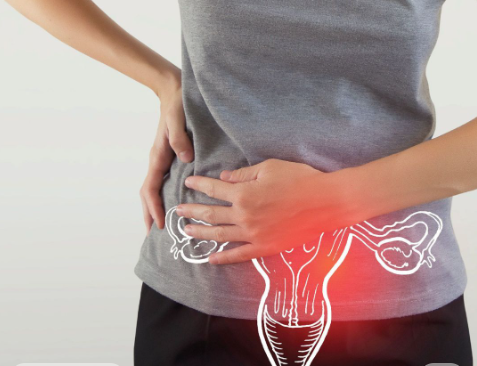
The urethra is the tube that carries urine out of the body from the bladder. A stricture is a narrowing of this tube, caused by scar tissue, which restricts urine flow — sometimes mildly, sometimes severely enough to make urination genuinely difficult.
Schedule a Clinical EvaluationA urethral stricture typically restricts the passage of urine, leading to progressive urinary symptoms. Common symptoms include:
A weak or narrow urine stream
Straining to urinate, or a stream that starts and stops
A feeling of incomplete bladder emptying
Recurrent urinary tract infections (UTIs)
In more severe cases, complete inability to urinate (urinary retention)
Understanding Factors Associated with Urethral Strictures
Urethral strictures typically develop when scar tissue forms along the urethral lining due to trauma, infection, inflammation, or prior medical procedures. Identifying the underlying cause helps guide the most effective clinical and reconstructive management plan.
Injury to the pelvis (such as pelvic fractures) or direct straddle trauma to the urethra causing scar tissue formation.
Prior catheterisation, cystoscopy, or previous surgical instrumentation of the urethra.
Infections affecting the urinary tract, including sexually transmitted infections (such as gonorrhoea or chlamydia).
Chronic inflammatory skin conditions such as lichen sclerosus (balanitis xerotica obliterans).
In some cases, no clear cause is ever identified, and narrowing develops without a known prior incident.
Uroflowmetry measures the speed and pattern of your urine flow, and a post-void residual scan checks how much urine is left in the bladder after urinating — both simple, non-invasive first steps that point toward a stricture when flow is reduced and residual urine is elevated.
A retrograde urethrogram — an X-ray taken while contrast dye is gently introduced into the urethra — maps the exact location and length of the stricture, which is essential for planning surgery. Cystoscopy, passing a thin scope through the urethra, may also be used to directly visualise the narrowed segment.
Understanding why initial minimally invasive interventions often fail and why reconstructive urethroplasty serves as the permanent gold standard for long or recurrent strictures.
DVIU is a minimally invasive scope procedure that cuts through the scar tissue causing the stricture, typically done as a day procedure. It's often tried first because it's quick and low-risk — but published outcomes consistently show a high recurrence rate, particularly for longer or previously treated strictures, since the underlying scar tissue tends to reform. This is precisely why many men find themselves back with the same symptoms within a year or two of a urethrotomy.
Urethroplasty is open reconstructive surgery that removes or reconstructs the narrowed segment itself, rather than simply cutting through the scar tissue in place — which is why it achieves substantially better long-term success rates than repeat urethrotomy, particularly for longer or recurrent strictures. It's a more involved procedure than DVIU, but it's designed to be a durable, one-time fix rather than a treatment you're likely to need again.
For short strictures, the narrowed segment is removed entirely and the two healthy ends of the urethra are rejoined directly. This technique generally offers excellent long-term success rates and is often the preferred approach where the stricture length allows it.
For longer strictures where the ends can't simply be rejoined without tension, a graft — most commonly using tissue taken from the inside of the cheek (buccal mucosa) — is used to widen or reconstruct the narrowed segment. Buccal mucosa is particularly well suited for this because it's durable, well-vascularised and accustomed to a moist environment, similar to the urethra itself.
The right technique depends primarily on the stricture's length and location, mapped out on your retrograde urethrogram, along with your overall health and any prior treatment history. This is explained specifically for your case during consultation, not chosen from a generic protocol.
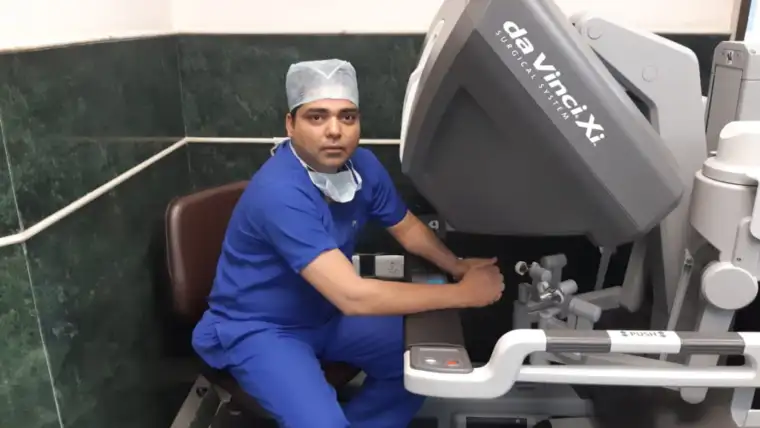
Reconstructive urethral surgery rewards genuine technical experience — accurately mapping the stricture, choosing the right technique, and executing a tension-free repair are all skill-dependent in a way that directly affects whether the result lasts. Dr. Arif Akhtar's practice in Gurugram includes urethroplasty for urethral stricture alongside his broader reconstructive and general urology practice. Exact current qualifications, hospital affiliation and case experience should be published exactly as verified by the doctor and kept consistent with the About page. [VERIFY WITH DOCTOR]
A catheter is left in place after surgery — typically for around two to three weeks — to allow the reconstructed urethra to heal fully before urine flows through it again. This is a longer catheter period than most other urologic procedures, and is a normal, expected part of recovery rather than a complication.
Once the catheter is removed, most men notice a substantially improved urine stream compared with before surgery. Follow-up, including uroflowmetry, continues over the following months and sometimes years to confirm the repair remains open and functioning well — recurrence after urethroplasty is possible but far less common than after urethrotomy alone.
Urethroplasty costs more upfront than a urethrotomy, but for many patients it replaces repeated urethrotomies over the years. Factors include stricture length/location, graft need, hospital stay, and prior procedures. An accurate estimate is given after evaluation. [VERIFY WITH DOCTOR]
Get clear answers about urethral strictures, DVIU vs. urethroplasty, catheter recovery, graft harvesting, and treatment costs in Gurugram.
Urethrotomy cuts through scar tissue but doesn't remove or reconstruct it, so the scar tissue can — and often does — reform over time, particularly for longer strictures or after multiple prior procedures. This is a well-documented pattern, not a sign that anything went wrong with your specific treatment.
It offers substantially better long-term success rates than repeat urethrotomy, and for many patients is a one-time, durable solution. No surgery can guarantee zero chance of recurrence, but urethroplasty is specifically designed to address the underlying problem rather than its symptom.
Typically around two to three weeks, longer than most other urology procedures, to allow the reconstruction to heal fully before urine passes through it again.
Anastomotic urethroplasty removes a short stricture and rejoins the healthy ends directly; graft urethroplasty uses tissue (usually from inside the cheek) to reconstruct longer strictures that can't simply be rejoined. Which is appropriate depends on your stricture's length and location.
The mouth heals quickly and reliably, and buccal mucosa grafting is a well-established technique with a long track record in reconstructive urology; any discomfort at the donor site is typically mild and temporary.
Cost depends on stricture length, whether a graft is needed, and hospital stay. Speak with the clinic directly for a personalised estimate after your evaluation. [Do not publish a specific figure or range without doctor/hospital confirmation. VERIFY WITH DOCTOR]