
Dr. Arif Akhtar
Senior Urologist
Hello! 👋 Welcome to Dr. Arif Akhtar. He is a Gurugram-based urologist specializing in robotic urology, uro-oncology, and kidney transplantation.
Just now
In roughly half of couples who struggle to conceive, a male factor is involved — yet it is still the less-discussed half of the conversation. Dr. Arif Akhtar sees men in Gurugram for the full evaluation and treatment of male infertility, from a first abnormal semen analysis through surgical correction where possible, working alongside your fertility specialist rather than in place of them.

Male-factor issues contribute to a substantial proportion of couples' fertility struggles — either as the primary cause or alongside a female-factor issue. This is worth saying plainly, because many men still assume infertility investigations are a “women's issue” and delay being evaluated themselves, which can delay treatment unnecessarily.
Schedule a Clinical EvaluationMale infertility can stem from a variety of medical, genetic, structural, and lifestyle factors. Common contributing factors include:
Varicocele: Enlarged veins in the scrotum, the single most common surgically correctable cause of male infertility.
Hormonal Imbalances: Affecting key hormones such as testosterone, FSH, or LH.
Genetic Conditions: Such as Klinefelter syndrome or Y-chromosome microdeletions.
Obstruction: Blockage preventing sperm from reaching the ejaculate, despite normal sperm production.
Lifestyle Factors: Smoking, excess alcohol consumption, obesity, and certain heat exposures.
Medical History: Prior infections, genital surgeries, or a history of undescended testes.
Comprehensive Clinical Assessment Methods
A thorough evaluation helps pinpoint the root cause of male infertility, allowing specialists to recommend target-driven treatment plans and appropriate reproductive strategies.
Almost always the first test, assessing sperm count, motility, and morphology. A single abnormal result doesn't always mean a lasting problem, so a repeat test is often recommended before drawing conclusions.
Blood tests for testosterone, FSH, and LH help determine whether a hormonal imbalance contributes to low sperm production and distinguish testicular issues from higher hormonal signaling pathways.
For men with unexplained infertility or recurrent pregnancy loss despite normal semen analysis, DFI testing looks at genetic material damage within the sperm—revealing details standard analyses miss.
For men with very low or absent sperm counts, genetic testing identifies inherited causes that shape treatment choice and guide genetic counseling before proceeding with assisted reproduction.
Where lifestyle factors or a treatable hormonal imbalance are contributing, addressing them — alongside medication where appropriate — can improve sperm parameters over the following months, since sperm production is an ongoing process that takes roughly three months to fully turn over.
Varicocelectomy surgically corrects the enlarged veins responsible for a varicocele, and is the most common surgical treatment in male infertility, often improving semen parameters over the months following surgery. Whether it's likely to help in a specific case depends on the varicocele's size and the overall fertility picture.
For men with obstructive or non-obstructive azoospermia — no sperm in the ejaculate — sperm can often still be retrieved directly from the testicle or epididymis for use in IVF/ICSI. TESA and PESA are less invasive aspiration techniques suited to many obstructive cases; Micro-TESE is a more detailed microsurgical technique used particularly for non-obstructive azoospermia, where sperm production itself is impaired and only small, scattered pockets of sperm production may exist within the testicle.
Where sperm parameters remain limited despite treatment, or where retrieved sperm is used directly, IVF with ICSI (where a single sperm is injected directly into an egg) is typically the path forward — coordinated with your IVF/fertility specialist, since this part of the journey sits with their team rather than being performed by a urologist.
Cost varies enormously depending on whether treatment stops at diagnosis and lifestyle/medical management, or extends to surgery or sperm retrieval. The main factors include diagnostic tests (semen analysis, hormonal panel, DFI testing, genetic testing), whether varicocelectomy or surgical sperm retrieval is needed, any subsequent IVF/ICSI costs, and hospital charges. Because the diagnostic and treatment path varies so much by cause, an accurate estimate is only possible after your initial evaluation.
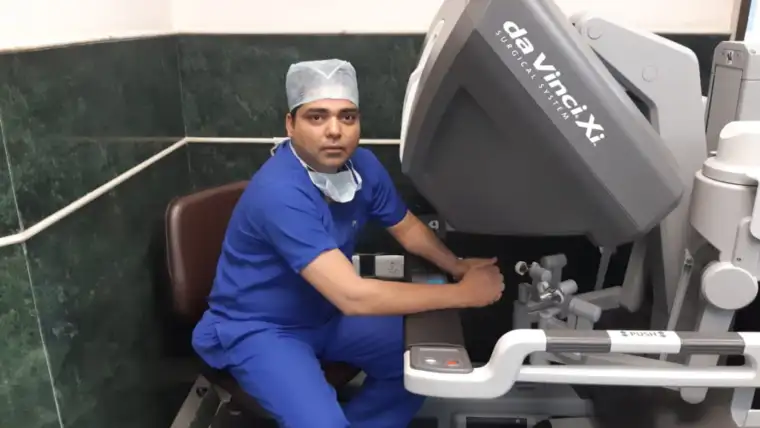
Dr. Arif Akhtar's role in your fertility journey is specifically the urological/andrology side — diagnosing the male factor accurately and correcting what can be surgically corrected, such as varicocele, or retrieving sperm directly where needed. This is deliberately positioned as one part of a larger team that may include your partner's gynaecologist and an IVF specialist, not a stand-alone complete fertility service — an honest framing that builds rather than undermines trust.
Your first visit involves a detailed history — including how long you've been trying to conceive, lifestyle factors, and any prior surgeries or infections — alongside a physical examination and a semen analysis if you haven't already had one done recently.
Based on initial results, further targeted tests are arranged only where they're likely to change the treatment plan, rather than ordering every possible test by default.
Findings are explained in plain terms, and next steps — whether that's lifestyle changes, surgery, or a referral for IVF/ICSI — are discussed as a joint decision with you and, where you'd like, your partner.
Get clear answers to common questions about male infertility evaluation, treatment options, surgery, recovery, and treatment costs in Gurugram.
Not necessarily — a low count is a spectrum, not a single verdict, and many men with a low count still conceive naturally or with modest treatment. Even where natural conception is unlikely, options like surgical sperm retrieval combined with IVF/ICSI remain available for many men.
Many causes — particularly varicocele and hormonal imbalances — are treatable or improvable. Some causes, particularly certain genetic conditions, aren't reversible, but sperm retrieval combined with IVF/ICSI can still offer a path to biological parenthood in many of these cases.
General guidance suggests seeking evaluation after about a year of trying without success — sooner if the female partner is over 35, or if there's a known risk factor on either side, such as a prior infection, surgery, or irregular cycles.
It often improves semen parameters over the following months, but results vary by individual and by the varicocele's severity — it's a genuine option worth discussing rather than a guaranteed fix, and your evaluation will clarify how likely it is to help in your specific case.
TESA and PESA are less invasive sperm-retrieval techniques generally suited to obstructive causes; Micro-TESE is a more detailed microsurgical technique typically used for non-obstructive azoospermia, where sperm production itself is impaired. Which is appropriate depends on your specific diagnosis.
Cost depends on which tests and treatments are needed, ranging from a basic evaluation through to surgery or sperm retrieval. Speak with the clinic directly for a personalised estimate after your initial evaluation.