
Dr. Arif Akhtar
Senior Urologist
Hello! 👋 Welcome to Dr. Arif Akhtar. He is a Gurugram-based urologist specializing in robotic urology, uro-oncology, and kidney transplantation.
Just now
Erectile dysfunction (ED) is the persistent inability to get or maintain an erection firm enough for satisfactory sexual activity. Occasional difficulty is common and is not usually a cause for concern; ED becomes a medical issue when the problem is frequent or ongoing.
Schedule a Clinical EvaluationErectile dysfunction often has more than one contributing cause. Physical health, medications, lifestyle factors and psychological concerns can all play a role.
Reduced blood flow due to conditions such as diabetes, high blood pressure or high cholesterol
Low testosterone or other hormonal imbalances
Certain medications that may affect erectile function
Smoking, excess alcohol use and obesity
Stress, anxiety, depression or relationship difficulties
Nerve-related causes, including those occurring after pelvic surgery
It's worth seeing a specialist if erectile difficulty is persistent, is affecting your confidence or relationship, or appears alongside other symptoms such as reduced libido or fatigue. Erectile dysfunction can sometimes be an early sign of an underlying cardiovascular or hormonal condition that may need further investigation.
Evaluation starts with a detailed, confidential discussion of your symptoms, medical history, medications and lifestyle factors, along with a focused physical examination.
Depending on your history, your doctor may recommend blood tests, including testosterone and blood sugar or lipid profile, and in select cases, tests to assess blood flow to the penis. Psychological factors are also explored where relevant, since erectile dysfunction is frequently multifactorial.
Erectile dysfunction treatment depends on the underlying cause, overall health, lifestyle factors and individual preferences. Dr. Arif Akhtar evaluates your symptoms and medical history to recommend an appropriate treatment plan, ranging from lifestyle changes and oral medication to devices, injection therapy and surgery.
For many men, addressing underlying contributors — including blood sugar and blood pressure control, weight management, reducing alcohol and quitting smoking — can meaningfully improve erectile function, either alone or alongside other treatment.
Oral PDE5 inhibitor medications are usually a first-line treatment for erectile dysfunction. They work by improving blood flow to the penis. Your doctor will advise on the appropriate choice and dosage based on your health history and any other medications you take.
For men who do not respond well to oral medication, or where medication is not suitable, a vacuum erection device or intracavernosal injection therapy can be effective alternatives. These options can be explained and demonstrated during consultation.
Low-intensity shockwave therapy is a non-invasive option that some men consider, particularly where a vascular cause is suspected. Suitability and expected benefit vary by patient and should be discussed individually rather than assumed to be effective for everyone.
For men who do not achieve satisfactory results with medication, devices or injections, penile implant surgery is a well-established surgical option. Read more on the Penile Implant Surgery page.
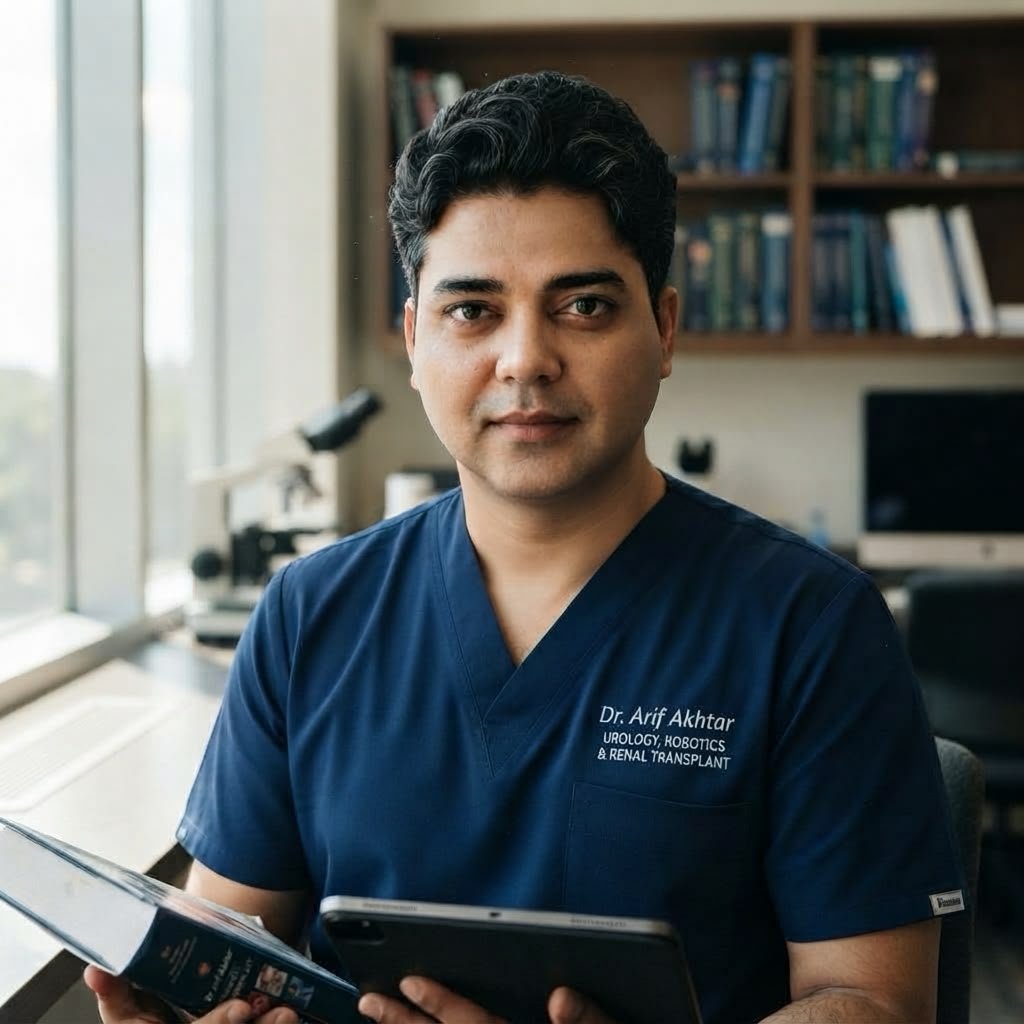
Dr. Arif Akhtar is a urologist practising in Gurugram whose practice includes andrology and men's sexual health — evaluation and treatment of erectile dysfunction and male infertility — alongside uro-oncology, robotic urology and renal transplantation. Consultations are conducted with discretion and without judgement. Exact current qualifications, fellowship details, hospital affiliation and years of practice should be published exactly as verified by the doctor and kept consistent with the About page.
Your first visit is a private, confidential conversation. There is no need for embarrassment, and you are welcome to bring a partner if you prefer. Your concerns, symptoms and medical history will be discussed with discretion and without judgement.
Based on your medical history, physical examination and any tests that may be needed, Dr. Arif Akhtar will assess the possible contributing factors and discuss the treatment options most suited to your situation.
Treatment generally starts with the least invasive option that is likely to work for you, with other treatments considered if needed. Your doctor will explain the expected benefits, limitations, risks and next steps before proceeding.
Cost varies significantly by the type of treatment. Oral medication is generally the least expensive option, while vacuum devices and injection therapy may cost more. Penile implant surgery — including the device itself, surgeon's fee and hospital stay — is typically the most expensive route. Some costs, such as ongoing medication, are recurring, while others, such as surgery, are one-time expenses. The right starting point and its cost depend on your individual evaluation, so speak with the clinic directly for a personalised estimate.
Get clear answers to common questions about erectile dysfunction, its causes, treatment options, recovery and treatment costs in Gurugram.
Erectile dysfunction becomes more common with age, largely because age-related conditions such as diabetes, high blood pressure and vascular disease also become more common. However, ED is not something you simply have to accept, and effective treatment is available at any age.
Many men see significant improvement with the right treatment, especially when an underlying cause is identified and addressed. Outcomes vary depending on the cause and individual circumstances, so this is discussed honestly during consultation rather than promised as guaranteed for everyone.
No. Erectile dysfunction often has both physical and psychological components. Stress, anxiety or relationship factors can contribute even when there is also a physical cause. A proper evaluation considers both physical and psychological factors where relevant.
Oral PDE5 inhibitor medication is typically the first option tried, alongside addressing any underlying risk factors. Further treatment options can be considered if oral medication is not effective or is not suitable for you.
Cost depends on the treatment recommended. Medication, device-based therapy and surgery can differ significantly in cost. Speak with the clinic directly for a personalised estimate after evaluation. Specific cost figures or ranges should be confirmed with the doctor or hospital before publication.