
Dr. Arif Akhtar
Senior Urologist
Hello! 👋 Welcome to Dr. Arif Akhtar. He is a Gurugram-based urologist specializing in robotic urology, uro-oncology, and kidney transplantation.
Just now
RIRS (retrograde intrarenal surgery) is a scarless treatment for many kidney stones, using a flexible scope passed through the body's natural urinary passage and a laser to break the stone into smaller fragments from inside the kidney. Dr. Arif Akhtar performs RIRS in Gurugram for suitable kidney stones, often as a single-sitting procedure. This page explains how RIRS works, who may be suitable for the procedure, and what to expect during recovery.
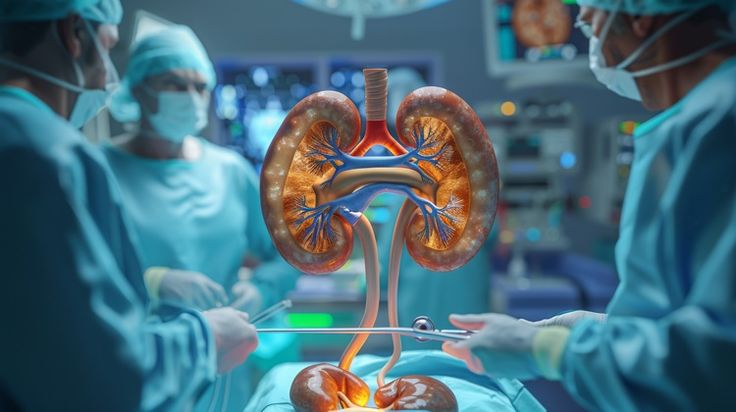
RIRS uses a flexible ureteroscope passed through the urethra and bladder up into the kidney — there is no external incision at all. This is different from PCNL, which accesses the kidney through a small incision in the back, and from ESWL, which breaks stones using shockwaves delivered from outside the body without any scope entering the urinary tract.
RIRS is commonly used for kidney stones up to around 2 cm, and in select cases for somewhat larger or more complex stones depending on their number, position and the anatomy of the urinary tract. It is often considered for stones that haven't responded to less invasive options like ESWL, or where a single-sitting solution is preferred. Suitability is assessed individually based on your imaging.
Schedule a Clinical EvaluationRetrograde Intrarenal Surgery provides a scarless, highly effective option for kidney stone removal with minimal downtime. Key benefits include:
No external incision — access is entirely through the natural urinary passage
Often completed in a single sitting for suitable stones
Generally shorter hospital stay than PCNL
Can be used for stones in positions that are harder to treat with ESWL
Laser fragmentation allows precise, targeted stone treatment
Suitability for RIRS depends on stone size, number, position, and urinary tract anatomy, and is determined on an individual basis through detailed imaging.
Understanding the Potential Risks and Clinical Safety of RIRS
As with any procedure, RIRS carries some risks, which your surgeon will discuss in detail for your specific case, including:
There is a small risk of superficial injury or minor trauma to the ureter or kidney lining during scope access.
Small stone fragments may remain following laser fragmentation that may require observation or further treatment.
Post-procedure infection is a known risk, which is actively prevented and managed with prescribed antibiotics.
Mild bladder irritation, frequency, or flank discomfort from the temporary DJ stent, which resolves upon removal.
In rare cases, a planned second sitting or an additional procedure may be needed to achieve complete stone clearance.
RIRS combines advanced flexible endoscopes and holmium laser technology to navigate the natural urinary tract and pulverise kidney stones without skin cuts.
Imaging (usually a CT scan) confirms the stone's size, number and exact position, and routine pre-anaesthesia tests are done to confirm fitness for the procedure.
Under anaesthesia, a thin flexible scope is passed through the urethra and bladder up into the kidney. A laser fibre passed through the scope breaks the stone into small fragments or dust, which are either removed with a small basket or left to pass naturally. A temporary DJ stent is usually placed at the end of the procedure to help the kidney drain while it heals, and is removed at a follow-up visit.
As with any procedure, RIRS carries some risks, which your surgeon will discuss for your specific case, including: injury to the ureter or kidney lining, residual stone fragments that may need further treatment, urinary tract infection, temporary discomfort from the DJ stent, or, in rare cases, the need for an additional procedure to fully clear the stone.
RIRS cost depends mainly on stone size and complexity, whether one sitting or a planned second sitting is needed, anaesthesia and hospital stay, and the specific hospital. It's a single procedure cost (not recurring), and is generally comparable to or somewhat less than PCNL for suitable stones, since it typically involves a shorter stay. Speak with the clinic directly for a personalised estimate after your evaluation.

Dr. Arif Akhtar's practice in Gurugram includes endourology and laser-based stone surgery, including RIRS and PCNL/mini-PCNL, alongside his broader uro-oncology, robotic urology and renal transplant practice. Exact current qualifications, hospital affiliation and case experience should be published exactly as verified by the doctor and kept consistent with the Kidney Stone Treatment and About pages.
RIRS is often done as a short-stay or single-day procedure, though this depends on stone complexity and individual factors — your surgical team will confirm the expected stay for your case.
Most patients return to light activity within a few days, with some mild stent-related discomfort common until the stent is removed. Your care team will guide you on activity restrictions specific to your recovery.
The temporary DJ stent placed during RIRS is removed at a follow-up visit, usually within a couple of weeks, along with imaging to confirm the stone has been adequately cleared.
Get clear answers to common questions about RIRS surgery, procedure safety, stone clearance rates, recovery expectations, and treatment costs in Gurugram.
RIRS is performed under anaesthesia, so you don't feel the procedure itself. Some discomfort from the temporary stent is common afterward and is managed with medication.
RIRS has a good stone-clearance rate for suitably selected stones, though success depends on stone size, number, position and anatomy; some patients may need a planned second sitting for complete clearance of larger or complex stones.
RIRS uses a flexible scope through the natural urinary passage with no incision, and suits many small-to-moderate stones; PCNL accesses the kidney through a small incision in the back and is generally used for larger or more complex stones. Your surgeon will recommend the option best suited to your stone.
Many patients go home the same day or the next day, depending on stone complexity and individual recovery — your surgical team will confirm this for your specific case.
Cost depends on the hospital, stone complexity and length of stay. Speak with the clinic directly for a personalised estimate after evaluation.