
Dr. Arif Akhtar
Senior Urologist
Hello! 👋 Welcome to Dr. Arif Akhtar. He is a Gurugram-based urologist specializing in robotic urology, uro-oncology, and kidney transplantation.
Just now
Not every kidney stone can be treated with a scope or shockwaves. When a stone is large, located in a difficult part of the kidney, or has not responded to other treatments, PCNL (percutaneous nephrolithotomy) provides direct access to the stone through a small incision in the back. Dr. Arif Akhtar performs both standard PCNL and mini-PCNL surgery in Gurugram, selecting the appropriate technique based on the stone's size, location and complexity.
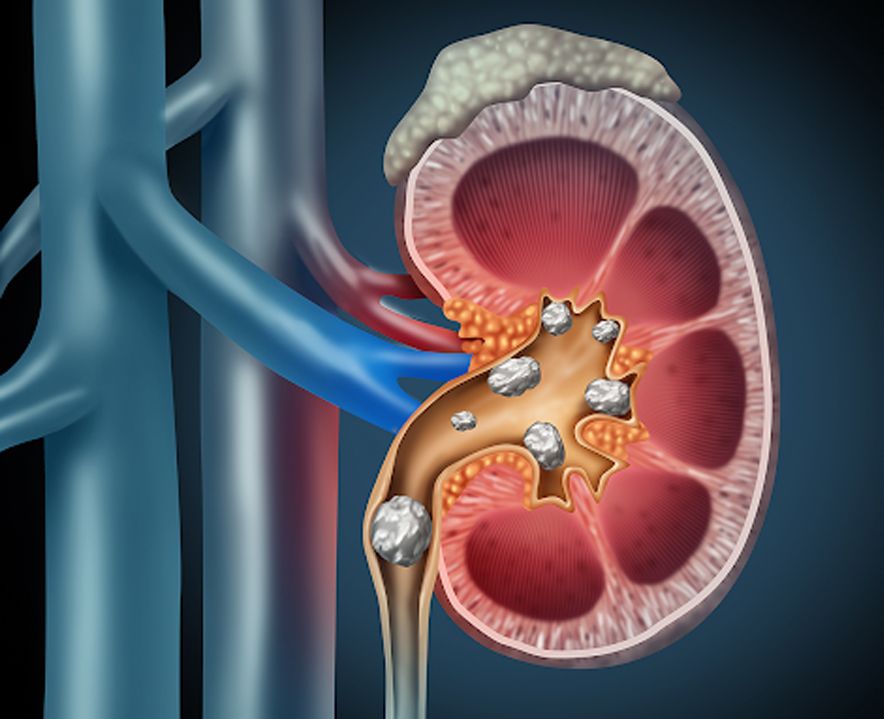
ESWL works best on smaller stones in a favourable position. RIRS, using a flexible scope through the natural urinary passage, handles many stones up to around 2 cm well. Beyond that — larger stones, stones filling much of the kidney's collecting system (staghorn stones), or stones that haven't cleared with a less invasive attempt — PCNL generally offers the more reliable single-sitting clearance, because it accesses the kidney directly rather than working around its natural anatomy. It comes with a small incision that RIRS and ESWL don't require, which is the trade-off for that higher clearance rate on bigger stones.
Schedule a Clinical EvaluationBoth procedures reach the kidney through the same route, but the size of the access tract and the stone characteristics can influence which approach is more suitable.
Both standard PCNL and mini-PCNL access the kidney through a small tract created in the back.
Mini-PCNL uses a narrower access tract, which is associated with less bleeding and may allow a shorter hospital stay.
The narrower tract used in mini-PCNL can sometimes mean a somewhat longer operating time for larger stones.
Standard PCNL remains an established option for very large or dense staghorn stones when maximising single-sitting clearance is important.
The appropriate approach depends on the stone's size, density and position, assessed through imaging.
A urologist evaluates your imaging and clinical factors to determine whether standard PCNL or mini-PCNL is more appropriate.
A CT scan maps the stone's exact size, density and position within the kidney. This information helps determine whether standard or mini access is more appropriate and allows the surgical tract to be carefully planned.
Under anaesthesia, a small tract is created through the back directly into the kidney's collecting system, guided by X-ray or ultrasound. A nephroscope is passed through this tract to visualise and break up the stone — usually with a laser or pneumatic device — and the fragments are removed directly. At the end of the procedure, a temporary drainage tube (and sometimes a DJ stent) may be left in place to help the kidney heal, removed before or shortly after discharge depending on the case.
Discuss Your PCNL OptionsUnderstanding PCNL Surgery Costs and Possible Complications
The cost of PCNL and mini-PCNL can vary from patient to patient and is generally influenced by the stone's size, number, density, the type of procedure required, hospital stay and post-operative care. A personalised estimate is usually provided after reviewing your imaging and treatment plan.
Larger, multiple or denser stones may require a longer procedure and can influence the overall treatment cost.
The access-tract size can affect the instruments used, procedure requirements and length of hospital stay.
The duration of hospitalisation, including any period with a drainage tube in place, can affect the total cost.
Some complex stones may require a planned second procedure to achieve complete stone clearance.
The selected hospital and room or ICU category can contribute to differences in the overall treatment cost.
A specific estimate should be provided only after the surgeon reviews your imaging and confirms the planned treatment.
PCNL is generally effective for larger and complex kidney stones, but potential complications can include:
Your surgeon will weigh these risks against the potential stone-clearance benefit when deciding whether PCNL is appropriate compared with a less invasive option.

Alongside RIRS, Dr. Arif Akhtar's endourology practice in Gurugram includes standard and mini-PCNL for larger and more complex kidney stones, within a broader uro-oncology, robotic urology and renal transplant practice. Exact current qualifications, hospital affiliation and case experience should be published exactly as verified by the doctor and kept consistent with the Kidney Stone Treatment, RIRS and About pages.
PCNL typically involves a longer hospital stay than RIRS — often a few days — partly to monitor for bleeding and to manage the drainage tube if one is placed. Mini-PCNL may allow a somewhat shorter stay in suitable cases.
Most patients need a longer recovery window than after RIRS before resuming normal activity, and heavier activity is typically restricted for a longer period. Your surgical team will give you a timeline specific to your procedure.
Common questions about PCNL, mini-PCNL, recovery, stone clearance and how PCNL compares with other kidney stone procedures.
Mainly stone size and complexity — PCNL is generally recommended when a stone is too large, too dense, or too complex, such as a staghorn stone, for RIRS or ESWL to clear reliably in one or two sittings.
Not automatically — mini-PCNL often means less bleeding and a shorter stay, but standard PCNL can still be the better choice for very large or dense stones where maximising single-sitting clearance matters most. The choice is made on a case-by-case basis.
It's more invasive than RIRS or ESWL, since it involves a small incision and direct kidney access, but it's still a minimally invasive procedure compared with open stone surgery, which is now rarely needed.
Most patients achieve stone clearance in a single sitting, but very large or staghorn stones occasionally need a planned second-look procedure to clear residual fragments completely.
PCNL uses a single small tract rather than a large open incision, with a nephroscope doing the work internally — open surgery for kidney stones is now uncommon and generally reserved for cases where PCNL, RIRS and ESWL aren't suitable.