
Dr. Arif Akhtar
Senior Urologist
Hello! 👋 Welcome to Dr. Arif Akhtar. He is a Gurugram-based urologist specializing in robotic urology, uro-oncology, and kidney transplantation.
Just now
If you have been told you need endourological procedures in Gurugram, it helps to understand what they involve. Endourology treats problems of the kidney, ureter, bladder and urethra from the inside, using thin telescopes passed through the body's natural passage or through a very small keyhole. Dr. Arif Akhtar is a urologist and urological surgeon practising in Gurugram, and this approach forms a large part of his work with kidney and ureteric stones and other urinary blockages.
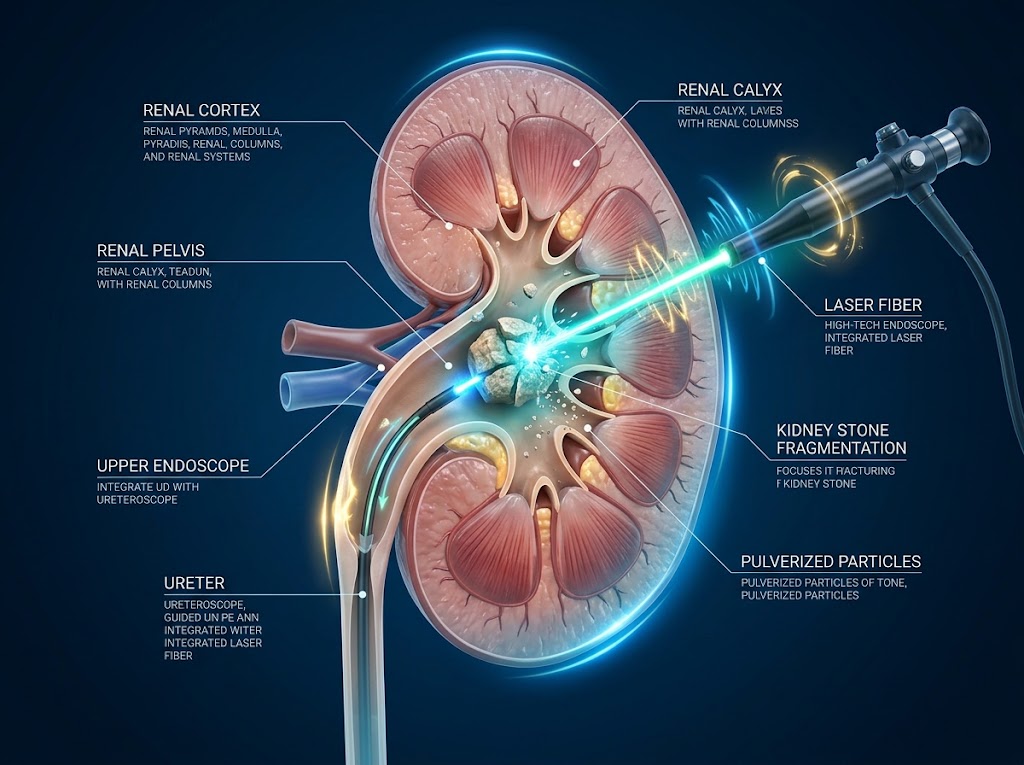
Endourology is a branch of urology in which the urinary tract is examined and treated from the inside, using endoscopes. An endoscope is a thin tube with a light, a camera and channels for fine instruments. The surgeon watches the inside of your urinary system on a screen and treats the problem without a large incision.
Depending on the problem, the scope reaches the kidney through the urethra, bladder and ureter, or through a small keyhole in the back. Lasers, baskets, small balloons and stents can be passed through the scope to break stones, remove them, open a narrowed passage or keep a ureter open while it heals.
This is different from open surgery, and also from laparoscopic or robotic surgery, where instruments enter through small cuts in the abdomen. Endourology works within the urinary tract itself. Cases that need robotic or reconstructive surgery are handled separately; see robotic urology for that approach.
Schedule a Clinical EvaluationYour urologist may suggest an endoscopic procedure for several conditions. Not every stone or urinary problem needs surgery; some can be managed with medicines, fluids and monitoring. A procedure is advised when the benefit is clear after evaluation.
Kidney stones and ureteric stones that are painful, blocking urine flow, causing infection or not passing on their own
Narrowing (stricture) or blockage of the ureter or urethra
Blood in the urine that needs a direct look inside the bladder or ureter
Placement or removal of a DJ stent, a thin tube that keeps the ureter open
Bladder stones, bladder growths or an enlarged prostate blocking urine flow
Advanced, Minimally Invasive Approaches for Stone and Ureteric Care
The procedures below are the ones most often used in stone and ureteric disease. Each has its own dedicated page with more detail regarding preparation, technique, and recovery.
A thin flexible scope is passed through the urethra, bladder and ureter into the kidney. A laser breaks the stone into small fragments, which are removed or allowed to pass. There is no cut on the skin. Read more on RIRS in Gurugram.
A narrow tract is made from the back into the kidney and a nephroscope is used to break and remove the stone. It is generally chosen for larger or more complex stones. Mini-PCNL uses a smaller tract. Read more on PCNL and Mini-PCNL.
A slim scope is passed up the ureter to see and treat stones or other problems in the ureter, often with laser, and a DJ stent may be left afterwards.
In selected patients with a large or complex stone burden, RIRS and PCNL can be combined in the same sitting. This is decided case by case.
DJ stents are placed before or after stone surgery or to relieve a blocked ureter. Additional endoscopic treatments for bladder or urethral issues can be performed based on clinical evaluation.
Evaluation: Your urologist takes your history, examines you and reviews urine tests and imaging such as ultrasound or a CT scan of the kidneys, ureters and bladder. If there is infection, it is treated first.
Anaesthesia: Most procedures are done under spinal or general anaesthesia.
The Procedure: The scope is passed through the urethra or a small keyhole. The surgeon treats the stone or blockage under direct vision, often with a laser.
After Surgery: A DJ stent or catheter may be left in place for a period. Most patients are observed in hospital before discharge, and the stay depends on the procedure.
Follow-Up: A check-up, sometimes with a repeat scan, confirms that the problem has been cleared. A stent, if present, is removed at a planned visit.
Because there are no large incisions, endoscopic surgery is generally associated with less pain, a shorter hospital stay and an earlier return to routine activity than open surgery. It also allows the surgeon to see and treat the problem directly.
Every procedure carries some risk. These can include bleeding, infection, temporary stent discomfort, stone fragments left behind that need further treatment, and, rarely, injury to the ureter or kidney. Results differ from patient to patient, and no surgeon can promise a particular outcome. Your surgeon will explain the risks specific to your case before you consent.
There is no single best procedure for everyone. As a broad guide, smaller stones are more often treated with RIRS or ureteroscopy and larger or more complex stones with PCNL, but this is not a fixed rule. Some patients need a staged approach. Your urologist will discuss the options with you after evaluation.
The size, number, position and hardness of the stone, or the exact type of blockage, heavily influence the choice of procedure.
The shape and anatomical structure of your kidney and ureter help determine if flexible scopes or keyhole access are most effective.
The presence of an active urinary infection or reduced kidney function dictates treatment timing and choice of intervention.
Previous stone surgeries, other past operations, and overall health conditions—including the use of blood-thinning medicines—are essential factors.
Your personal preferences, work commitments, and the number of sittings you are willing to consider are integral to planning your care.
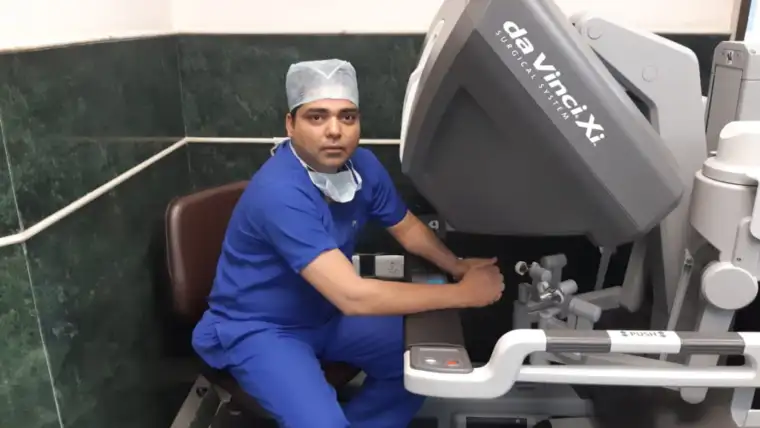
Dr. Arif Akhtar is a urologist and urological surgeon. He completed MBBS and MS (General Surgery) at J.N. Medical College, Aligarh Muslim University, and MCh (Urology) at Dr. Ram Manohar Lohia Hospital, New Delhi. His earlier work includes positions at Fortis Hospital (Vasant Kunj and Shalimar Bagh), Rockland Hospital, Saket, and Fortis Memorial Research Institute, Gurugram.
His practice includes minimally invasive stone surgery such as mini-PCNL, RIRS and ECIRS, along with laparoscopic and robotic urological surgery, urethroplasty and kidney transplant surgery. He consults at Marengo Asia Hospitals, Sector 56 and Medharbour, Sector 51, bringing over 13 to 15 years of surgical experience to his clinical practice.
After RIRS or ureteroscopy, many patients go home within a day or two; PCNL usually needs a longer stay. If a DJ stent is placed, it can cause temporary burning, urgency, flank discomfort, or blood-tinged urine until it is removed, which is managed with prescribed medications.
Drink plenty of fluids unless advised otherwise, take all medicines as prescribed, and avoid heavy lifting until cleared by your doctor. Be sure to keep all follow-up appointments, including stent removal and any repeat imaging.
Contact your doctor or visit the nearest emergency department if you develop fever with chills, heavy bleeding or clots, inability to pass urine, or severe pain. Ask about stone analysis and preventive guidance, as stones can recur.
Get clear answers to common questions about endourology, procedures like RIRS and PCNL, recovery, and when to consult a specialist.
Endourology is a branch of urology in which the urinary tract is examined and treated from the inside, using thin telescopes (endoscopes) fitted with a camera and fine instruments. The scope is passed through the urethra or through a small keyhole in the back, so most procedures do not need a large cut.
Common endourological procedures include ureteroscopy, retrograde intrarenal surgery (RIRS), percutaneous nephrolithotomy (PCNL), mini-PCNL, cystoscopy and DJ stent placement. Endoscopic surgery for bladder growths, urethral narrowing or an enlarged prostate can also come under endourology. Your surgeon will tell you which of these is suitable in your case.
RIRS (retrograde intrarenal surgery) is used to treat kidney stones. A thin, flexible scope is passed through the urethra, bladder and ureter into the kidney, and a laser breaks the stone into small pieces. It is often considered for small to medium stones and when a cut in the back is best avoided, but the choice depends on stone size, position and kidney anatomy.
PCNL (percutaneous nephrolithotomy) is keyhole surgery for kidney stones. A narrow tract is made through the skin of the back into the kidney, and a nephroscope is passed through it to break and remove the stone. It is usually advised for larger or more complex stones. Mini-PCNL uses a smaller tract.
The choice depends on the size, number, position and hardness of the stone or the nature of the blockage, the shape of your kidney and ureter, any infection, previous surgery, other health conditions and your own preferences. Your urologist decides after examining you and reviewing your scans and urine tests.
Most endourological procedures are done under spinal or general anaesthesia, so you do not feel pain during surgery. Some short diagnostic procedures, such as cystoscopy, may be done with local anaesthesia. Your surgeon and anaesthetist will explain the option that suits you.
It varies with the procedure and the person. Many patients go home within a day or two after ureteroscopy or RIRS, while PCNL usually needs a longer hospital stay. If a DJ stent is placed, mild urinary discomfort is common until it is removed. Your doctor will advise on return to work and follow-up.
See a urologist for repeated or severe flank pain, blood in the urine, burning or difficulty passing urine, repeated urinary infections, or a stone found on a scan. Seek urgent care for fever with chills, inability to pass urine or pain that you cannot bear.