
Dr. Arif Akhtar
Senior Urologist
Hello! 👋 Welcome to Dr. Arif Akhtar. He is a Gurugram-based urologist specializing in robotic urology, uro-oncology, and kidney transplantation.
Just now
A raised PSA result or an abnormal prostate exam can raise questions and uncertainty about what comes next. Dr. Arif Akhtar sees men in Gurugram at every stage of this journey — from an initial abnormal screening result through biopsy and staging, and, when surgery is appropriate, robotic radical prostatectomy. This page explains what prostate cancer is, how it is diagnosed and graded, the treatment options available, and what to expect from prostate cancer surgery and recovery.
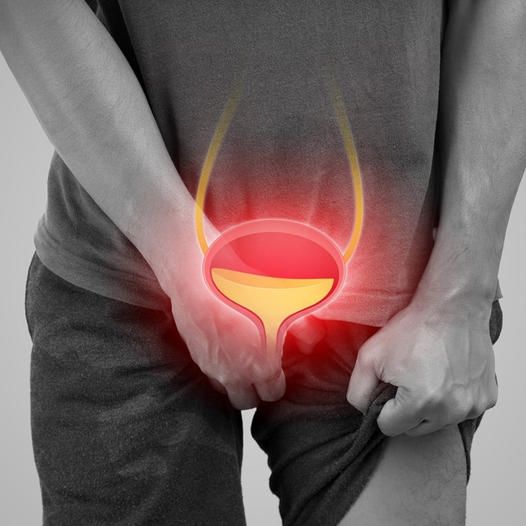
Prostate cancer begins in the prostate — a walnut-sized gland that sits below the bladder and produces part of the fluid in semen. It is one of the most common cancers diagnosed in men, and importantly, it behaves very differently from patient to patient: some prostate cancers grow so slowly they may never need active treatment, while others are aggressive and need prompt intervention. This is exactly why accurate staging and grading, not just a diagnosis, matters so much before deciding on a treatment path.
Schedule a Clinical EvaluationEarly-stage prostate cancer frequently causes no symptoms at all, which is why screening matters. When symptoms do appear, they can include:
Difficulty starting or stopping urination, or a weak urine stream
Increased frequency of urination, particularly at night
Blood in the urine or semen
Discomfort or pain in the pelvic area
Unexplained bone pain, particularly in more advanced disease
Symptoms alone cannot distinguish prostate cancer from benign prostate enlargement (BPH), so proper evaluation is important
Understanding Age, Family History and Other Risk Factors
Prostate cancer risk is influenced by several factors, including age, family history, inherited genetic changes and ethnicity. Lifestyle and dietary factors may also play a role, although the evidence for these is less definitive than for age and family history.
The risk of prostate cancer rises meaningfully after age 50 and may increase earlier in men with a strong family history.
Having a father or brother with prostate cancer can roughly double an individual's risk compared with someone without this family history.
Certain inherited genetic changes, including BRCA2 mutations, can increase the risk of developing prostate cancer and may be associated with more aggressive disease.
The risk of prostate cancer and patterns of disease aggressiveness vary across different populations and ethnic groups.
Diet may influence prostate cancer risk, although current evidence is less definitive than established factors such as age and family history.
Some lifestyle factors may be associated with prostate cancer risk, but their individual contribution is not as clearly established as age or inherited risk.
Prostate-specific antigen (PSA) is a protein measured through a simple blood test. A raised PSA does not confirm cancer because infection, benign prostate enlargement (BPH) and even recent ejaculation can increase PSA levels. However, an elevated or changing PSA may prompt closer evaluation. Many guidelines suggest that men discuss PSA screening with a urologist from around age 50, or from 40–45 if they have a family history or other elevated risk factors. Screening can be discussed proactively because early-stage prostate cancer often causes no symptoms.
If PSA or examination findings raise concern, a prostate MRI is typically performed to identify suspicious areas within the gland. An MRI fusion biopsy combines the MRI images with real-time ultrasound guidance, allowing biopsy needles to be directed more precisely toward suspicious areas rather than relying only on systematic sampling. This approach can improve detection of clinically significant prostate cancer while helping reduce unnecessary sampling of low-risk tissue.
When prostate cancer is identified, the biopsy tissue is graded using the Gleason system, which evaluates how abnormal the cancer cells appear under a microscope. The grade provides important information about how aggressively the cancer may behave. The Gleason score, together with PSA level and clinical stage, helps place the cancer into risk categories such as low, intermediate or high risk and plays an important role in determining which treatment options may be appropriate.
Staging describes how far prostate cancer has spread. Localized disease remains confined to the prostate, while locally advanced disease has extended beyond the gland or into nearby structures. Metastatic disease has spread to lymph nodes, bone or other organs. Staging is assessed using imaging alongside biopsy and blood-test results and is a major factor in deciding whether treatment may involve surgery, radiation therapy, hormone therapy or a combination of approaches.
Prostate cancer treatment depends on the cancer's risk group, Gleason score, PSA level, stage, overall health and individual priorities. Dr. Arif Akhtar discusses the available approaches with each patient, ranging from active surveillance for carefully selected low-risk disease to surgery and, where appropriate, radiation and hormone therapy.
For carefully selected men with low-risk, localized prostate cancer, active surveillance may be an appropriate strategy. It involves regular PSA checks, imaging and repeat biopsies rather than immediate treatment. This structured monitoring approach can help avoid or delay treatment-related side effects until there are signs that the cancer may be progressing.
Robotic radical prostatectomy removes the entire prostate gland using a robotic-assisted, minimally invasive approach. Where the cancer's location and stage allow, nerve-sparing techniques may be considered with the aim of preserving erectile and urinary continence function while achieving cancer control. The magnified 3D view and wristed instruments can assist with precise dissection around the nerve bundles located close to the prostate.
Open and laparoscopic radical prostatectomy remain relevant surgical approaches in selected clinical situations. The choice of surgical technique depends on the individual case, cancer characteristics, patient factors and the availability and suitability of the approach.
For some patients, radiation therapy with or without hormone therapy may be a more appropriate primary treatment than surgery. This can depend on the stage and risk profile of the cancer, overall health, suitability for surgery and individual treatment preferences. Where appropriate, treatment planning may be coordinated with a radiation oncology specialist.
Treatment decisions take into account the Gleason score, PSA level and cancer stage alongside age, overall health and individual priorities. Some patients may place greater emphasis on cancer control, while others may place greater importance on preserving urinary continence and sexual function when the cancer's risk profile allows those considerations. The final treatment plan is based on an individual discussion of these factors rather than a single approach for every patient.

Dr. Arif Akhtar's uro-oncology practice in Gurugram includes prostate, kidney and bladder cancer surgery, with robotic training through the Vattikuti Travelling Scholarship. For prostate cancer, his approach involves considering the individual cancer risk, treatment options and the balance between cancer control and quality-of-life factors such as urinary continence and sexual function. Exact current qualifications, hospital affiliation and case experience should be published exactly as verified by the doctor and kept consistent with the About and Robotic Urology pages.
Once staging is complete and surgery is agreed as the appropriate treatment path, a pre-surgical evaluation confirms your fitness for anaesthesia and finalises the surgical plan. This includes assessing whether nerve-sparing surgery is oncologically appropriate for the location and extent of your prostate cancer.
Robotic radical prostatectomy is performed under general anaesthesia. Hospital stay is generally shorter with a robotic approach than with open surgery, although the exact duration depends on your recovery, overall health and whether any additional procedures are performed at the same time.
A urinary catheter is typically needed for a short period after surgery while the bladder-to-urethra connection heals. Urinary continence usually improves gradually over weeks to months. Erectile function recovery, when nerve-sparing surgery is performed, is also gradual and varies between individuals. Pelvic floor exercises and additional treatments, where needed, may support recovery.
Understanding the Factors That Influence Treatment Cost
Prostate cancer treatment cost varies significantly because the appropriate treatment path can differ according to the cancer stage, risk profile and individual circumstances. The final estimate can only be determined after diagnosis, staging and treatment planning are complete.
Cost depends on whether the recommended approach is active surveillance, surgery, radiation therapy or a combination of treatments.
If surgery is chosen, the cost can vary depending on whether robotic, laparoscopic or open radical prostatectomy is performed.
The length of hospitalisation and whether intensive care is required can affect the overall treatment cost.
Investigations such as prostate MRI, MRI fusion biopsy and staging scans may contribute to the overall cost before treatment begins.
The treating hospital and selected room or ICU category can also influence the total treatment expenditure.
An accurate estimate is possible only after diagnosis and staging are complete and the appropriate treatment plan has been established.
Get clear answers to common questions about PSA, prostate cancer surgery, active surveillance, nerve-sparing surgery, robotic prostatectomy, recovery and treatment costs in Gurugram.
No. PSA can be raised by prostate cancer as well as non-cancerous conditions such as infection and benign prostate enlargement. A raised PSA is a reason for further evaluation, not a diagnosis of prostate cancer on its own.
No. For carefully selected men with low-risk, localized prostate cancer, active surveillance may be appropriate instead of immediate treatment. Depending on the cancer's stage and grade, treatment may involve surgery, radiation therapy, hormone therapy or a combination of approaches.
Nerve-sparing surgery aims to preserve the nerve bundles located alongside the prostate that are important for erectile function. Whether nerve-sparing is appropriate depends on the location, extent and stage of your cancer. It is not oncologically safe or suitable in every case, so your surgeon will assess your individual situation and explain the approach recommended for you.
Some degree of temporary urinary leakage is common immediately after prostate surgery and typically improves over weeks to months for many men. Pelvic floor exercises can support recovery. Long-term significant incontinence is uncommon but possible and should be discussed as part of informed consent before surgery.
Robotic prostatectomy uses small incisions, magnified 3D vision and wristed surgical instruments to remove the prostate. For suitable patients, robotic surgery is generally associated with less blood loss and a shorter hospital stay than open surgery, while providing comparable cancer control when performed appropriately.
Cost depends heavily on the cancer stage, treatment path and whether surgery is robotic, laparoscopic or open. Pre-treatment investigations, hospital stay and room category can also affect the final cost. Speak with the clinic directly for a personalised estimate once staging is complete.