
Dr. Arif Akhtar
Senior Urologist
Hello! 👋 Welcome to Dr. Arif Akhtar. He is a Gurugram-based urologist specializing in robotic urology, uro-oncology, and kidney transplantation.
Just now
Finding out your child has a urological condition — whether flagged on a prenatal scan, noticed at birth, or appearing later in childhood — is worrying for any parent. The reassuring news is that most of these conditions are well understood, well treated, and children generally recover from urological surgery quickly and completely. Dr. Arif Akhtar sees children in Gurugram for evaluation of urological conditions, taking the time to explain what's happening in plain language for both you and, where age-appropriate, your child.
Most pediatric urology conditions are congenital differences in development that are identified early in life or even before birth. With timely clinical evaluation, gentle monitoring, and modern minimally invasive techniques, childhood urological conditions can be effectively corrected to safeguard long-term kidney function, normal development, and future quality of life.
Schedule a Consultation for Your ChildEarly clinical evaluation helps determine whether a condition requires active monitoring or timely intervention:
Undescended Testes (Cryptorchidism): One or both testes fail to descend into the scrotum before birth. Usually noticed at a newborn check-up, surgical correction (orchidopexy) is generally recommended between 6 and 18 months of age to protect future fertility and reduce long-term risks.
Hypospadias: The urethral opening is positioned along the underside of the penis rather than at the tip. A common congenital condition, mild to moderate cases are typically corrected in a single operation between 6 and 18 months; complex cases may require a staged repair.
Vesicoureteral Reflux (VUR): Backward flow of urine from the bladder toward the kidneys, increasing infection risk. Milder grades often resolve on their own with low-dose preventive antibiotics and monitoring, while higher grades may require surgical correction.
Antenatal Hydronephrosis & UPJ Obstruction: Swelling of the kidney detected on prenatal ultrasound. Many mild cases resolve spontaneously, but persistent blockages at the kidney-ureter junction (UPJ) can be safely corrected with minimally invasive or laparoscopic surgery.
Bedwetting & Daytime Incontinence: Involuntary leakage or persistent bedwetting can stem from developmental delays in bladder control or underlying structural factors. Most straightforward cases are successfully managed with behavioral strategies and medication without surgery.
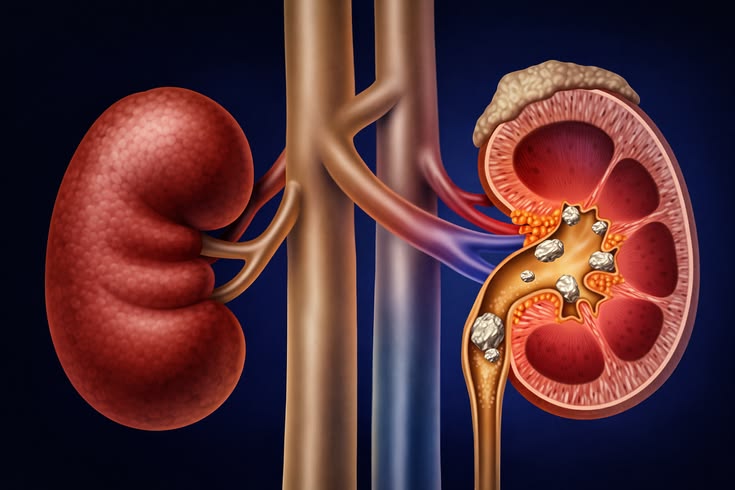
Phimosis, Hydrocele & Pediatric Stones: Phimosis (tight foreskin) and hydrocele (fluid around the testicle) often resolve spontaneously or with minor intervention. Pediatric kidney stones are treated with adult minimally invasive principles adapted for smaller anatomy.
Gentle, Child-Centered Diagnostic & Clinical Assessment
Evaluating a child requires a calm, supportive environment and non-invasive diagnostic tools designed specifically for safety, precision, and comfort.
The first visit is a calm, unhurried conversation — your child's medical history, a gentle physical examination, and dedicated time for you to ask every question you have. Everything is explained clearly in plain language, without rushing past the details that matter most to parents.
Most pediatric evaluations rely on ultrasound, which is entirely painless and radiation-free. When additional detail is required, specific imaging or simple urine tests are chosen with your child's safety, physical comfort, and emotional well-being as the top priority.
Many pediatric urology findings — including many cases of hydronephrosis, mild VUR, and hydrocele — improve or resolve entirely on their own with growth and regular monitoring, without ever needing surgery. Recommending watchful waiting where clinically sound, rather than defaulting to immediate surgical intervention, is a cornerstone of responsible pediatric care.
Where surgery is necessary, optimal timing is crucial. Conditions like undescended testes and hypospadias have proven age windows (often 6 to 18 months) associated with the highest success rates and lowest psychological impact. Early evaluation ensures your family has a clear, planned schedule without unnecessary emergency rush.
When surgery is required, minimally invasive, laparoscopic, and micro-surgical techniques are prioritized whenever suitable for your child's age and condition. This results in minimal tissue trauma, smaller cosmetic incisions, reduced post-operative discomfort, and a swift return to normal play.
Treatment costs vary depending on whether care entails medical management, an outpatient minor procedure, or reconstructive surgery under general anesthesia. Primary cost drivers include the specific procedure, duration of hospital stay, specialized pediatric nursing care, and pre-operative diagnostic imaging. A transparent estimate is provided after your child's clinical evaluation.
Dr. Arif Akhtar provides compassionate, patient-first urological care focused on organ preservation and long-term functional health for infants, children, and adolescents. Recognizing that treating children requires extra patience and gentle communication, every clinical pathway is planned around unhurried consultations, conservative management where appropriate, and advanced child-safe surgical techniques coordinated in modern pediatric facilities.
If treatment or surgery is recommended, our care team walks parents through the entire day in detail, offering age-appropriate language to reassure your child beforehand and answering every practical question.
Procedures are performed under specialized pediatric anesthesia using minimally invasive techniques. Children naturally recover quickly, frequently returning to light play and normal feeding within days.
Scheduled follow-up visits verify tissue healing. For conditions such as VUR or antenatal hydronephrosis, ongoing ultrasound check-ups monitor kidney function and track complete resolution over time.
Clear, empathetic answers regarding childhood urological conditions, diagnostic evaluation, procedures, and post-operative recovery in Gurugram.
No. Most pediatric urology conditions — including hypospadias, undescended testes, and antenatal hydronephrosis — are congenital differences in anatomical development that are not caused by anything a parent did or didn't do during pregnancy.
Some mild discomfort is expected following any surgical procedure and is well controlled with child-safe oral pain medications. Most children recover smoothly, show remarkable resilience, and return to their routine play much faster than parents typically anticipate.
Costs vary based on the specific condition, whether watchful waiting or surgery is required, the type of pediatric anesthesia, and the duration of stay. Because treatment needs differ considerably, a detailed and transparent cost breakdown is provided following your child's initial in-person clinical evaluation.
Surgical corrections for conditions like undescended testes and hypospadias are generally advised between 6 and 18 months of age. Operating within this window ensures optimal healing, protects future organ function, and avoids emotional distress or recall for the child.
Yes. A substantial number of children with antenatal hydronephrosis or low-grade vesicoureteral reflux (VUR) outgrow the condition spontaneously as the urinary tract matures. Regular monitoring with safe ultrasounds ensures surgery is performed only when truly necessary.
Yes. The vast majority of pediatric urological evaluations utilize ultrasound, which uses sound waves rather than ionizing radiation and is completely safe and painless. Any additional specialized tests are selected strictly on clinical necessity with pediatric safeguards.