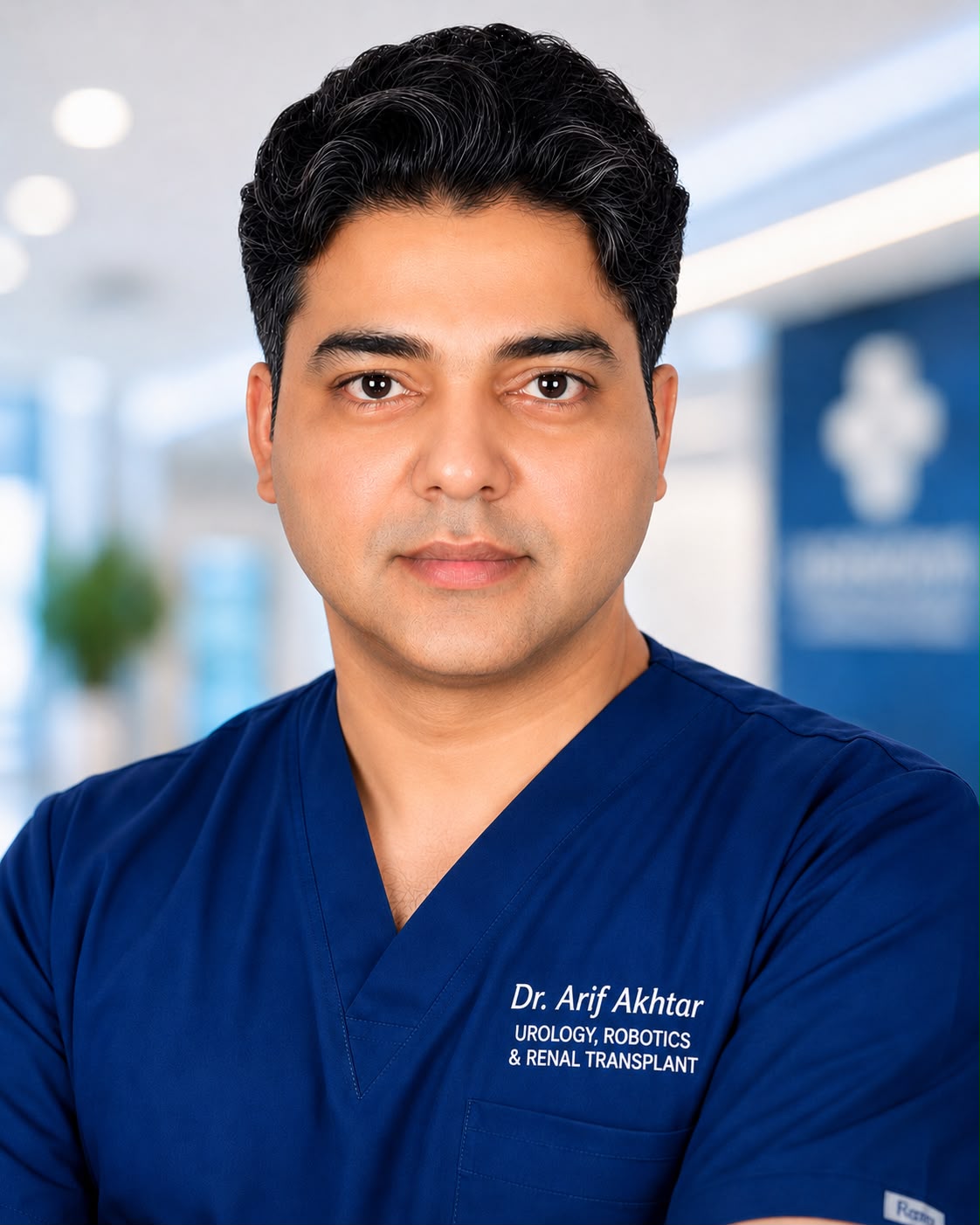
Dr. Arif Akhtar
Senior Urologist
Hello! 👋 Welcome to Dr. Arif Akhtar. He is a Gurugram-based urologist specializing in robotic urology, uro-oncology, and kidney transplantation.
Just now
Robotic-assisted surgery has changed what is possible in complex urologic procedures, offering smaller incisions, greater surgical precision and, for many patients, a faster return to normal life. Dr. Arif Akhtar performs robotic-assisted urology surgery in Gurugram for prostate, kidney and bladder conditions, with training through the Vattikuti Robotic Surgery Fellowship Programme. This page explains how robotic surgery works, the procedures it is used for, and what to expect if your treatment plan includes a robotic approach.
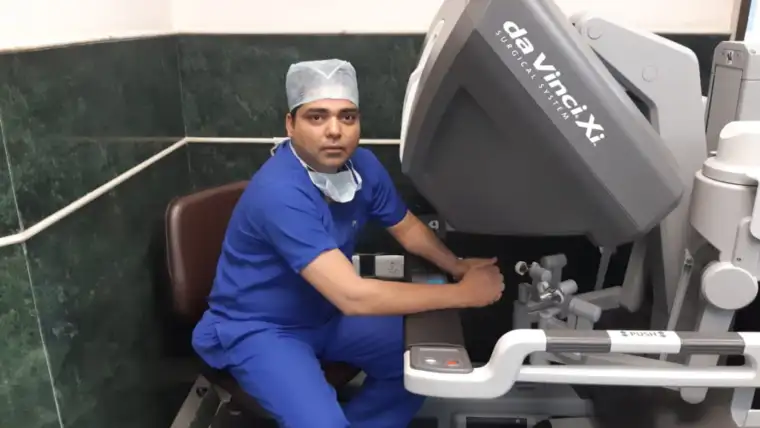
In robotic-assisted surgery, the surgeon operates through small incisions using robotic instruments controlled from a console, guided by a magnified, high-definition 3D view of the surgical area. The robotic system translates the surgeon's hand movements into precise, filtered instrument movements with a greater range of motion than the human wrist. The surgeon remains in control throughout the procedure; the robot does not operate independently.
Open surgery uses a single larger incision, while laparoscopic surgery uses several small incisions with rigid, straight instruments and a 2D camera view. Robotic surgery also uses small incisions but adds 3D magnified vision and wristed instruments with a wider range of motion, which can help with precision in confined spaces, such as during nerve-sparing prostate surgery or reconstructing the kidney after tumour removal. The right approach for a given patient depends on the specific condition, anatomy and surgical goals, and is discussed individually.
Schedule a Clinical EvaluationRobotic-assisted urology surgery combines minimally invasive access with advanced visualisation and instrument control. Potential benefits include:
Smaller incisions than open surgery, which can mean less post-operative pain
Enhanced 3D magnified visualisation of the surgical field
Greater instrument precision and range of motion in confined anatomical spaces
Potential for reduced blood loss compared with open surgery
Often a shorter hospital stay and faster return to daily activities than open surgery
Not every patient or every tumour is suited to a robotic approach. Suitability depends on the specific condition, anatomy and overall health, and is assessed case by case rather than assumed.
Robotic-assisted surgery can be used across a range of urologic procedures, particularly where precise dissection, reconstruction and minimally invasive access are important. The appropriate robotic procedure depends on the condition, anatomy, stage of disease and individual treatment goals.
Robotic radical prostatectomy removes the prostate gland for prostate cancer using a robotic-assisted, minimally invasive approach, with an emphasis on nerve-sparing technique where oncologically appropriate. Read more on the Robotic Prostatectomy
For kidney tumours, robotic assistance can support precise tumour removal while preserving healthy kidney tissue through partial nephrectomy, or complete kidney removal through radical nephrectomy where clinically indicated. Read more on the Robotic Partial Nephrectomy
Robotic-assisted cystectomy, which involves removal of the bladder for bladder cancer, and other robotic bladder procedures may be considered where clinically appropriate. See the Bladder Cancer Surgery page for condition-specific information.
Robotic techniques can also be used for selected reconstructive urologic procedures, such as pyeloplasty for a blocked kidney junction caused by ureteropelvic junction (UPJ) obstruction. The minimally invasive approach can provide precise instrument control for delicate suturing and reconstruction. Suitability and availability of this procedure should be confirmed during clinical evaluation.
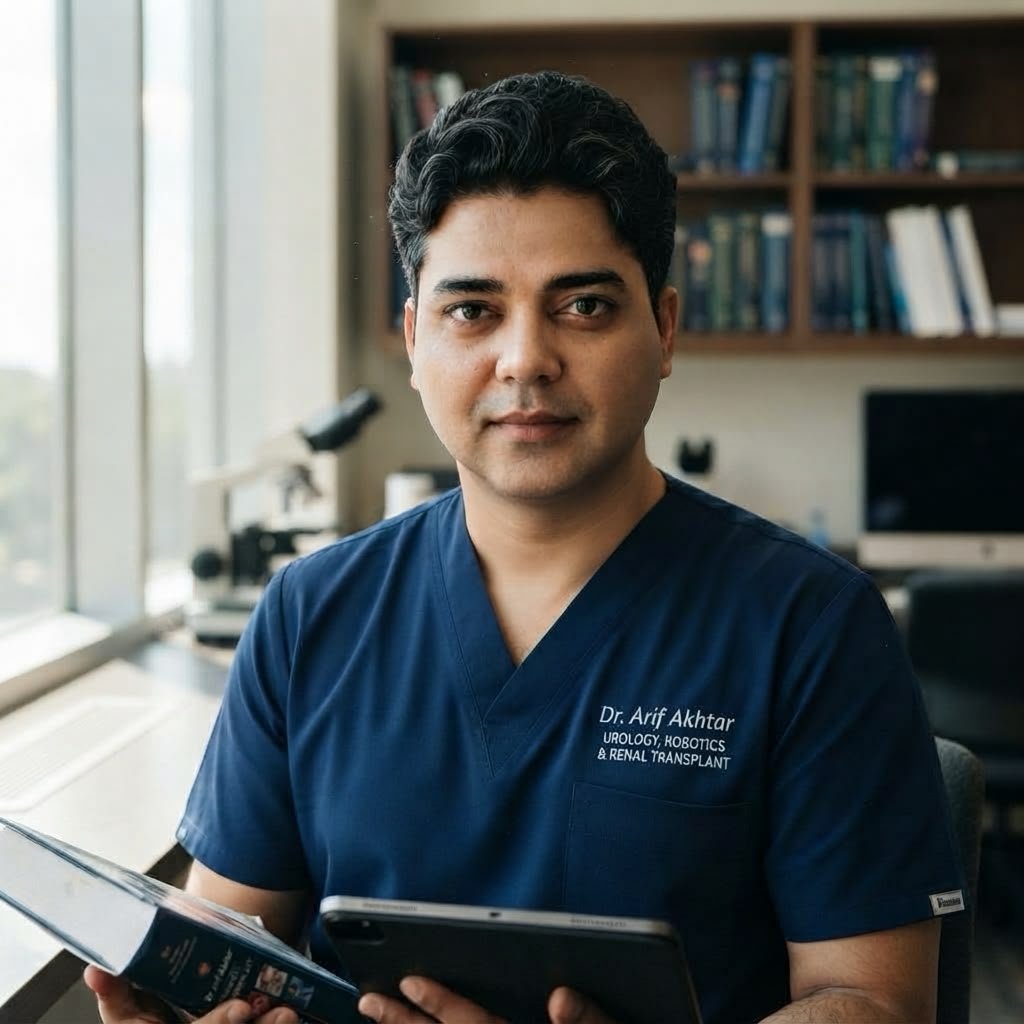
Dr. Arif Akhtar's robotic surgery training includes the Vattikuti Travelling Scholarship in robotic surgery, alongside his broader super-specialisation in urology (MCh Urology) following training in general surgery. His practice covers robotic and laparoscopic urologic surgery across uro-oncology and renal transplantation. Exact current qualifications, the full official name and details of the fellowship, hospital affiliation and years of practice should be published exactly as verified by the doctor and kept consistent with the About page.
Your consultation includes a review of your diagnosis and imaging, a discussion of whether a robotic approach is suitable for your specific case, and any pre-surgical tests needed to confirm fitness for surgery.
Robotic surgery is performed under general anaesthesia. Hospital stay varies by procedure and individual recovery. Your surgical team will explain what to expect for your specific operation before the day of surgery.
Recovery is generally faster than after equivalent open surgery, though the exact timeline depends on the procedure performed and individual healing. You'll receive clear guidance on activity restrictions, wound care and follow-up appointments before you're discharged.
Get clear answers to common questions about robotic urology surgery, how robotic systems work, suitable conditions, recovery, and treatment costs in Gurugram.
No. The surgeon controls every movement of the robotic instruments from the console throughout the procedure. The robotic system does not act independently or make decisions on its own.
Not automatically. Robotic surgery offers real advantages for many procedures, but suitability depends on the specific condition, tumour characteristics and patient anatomy. Your surgeon will recommend the approach best suited to your case rather than defaulting to one technique for everyone.
Robotic techniques are commonly used for prostate cancer, kidney cancer and bladder cancer surgery, as well as for certain reconstructive procedures. The specific procedures currently offered are listed above.
Recovery time depends on the specific procedure and individual factors. In general, robotic surgery allows a faster return to daily activities than equivalent open surgery, but your surgeon will provide a timeline specific to your operation and recovery.
Cost depends on the specific procedure, hospital stay and hospital. Speak with the clinic directly for a personalised estimate after evaluation. A specific cost figure or range should be confirmed with the doctor or hospital before publication.