Kidney Pain vs Back Pain: How to Tell the Difference
Quick answer: Kidney pain typically sits higher up, just under the ribs on one side, and often comes with urinary changes, nausea, or fever. Muscular back pain is usually lower, tends to worsen with movement or certain postures, and often eases with rest or a position change. Since the two can still overlap, especially early on, persistent or unusual pain is worth having evaluated rather than assumed.
Telling kidney pain apart from ordinary back pain is harder than most people expect, largely because both can show up in a similar general area and both can genuinely hurt. Get this distinction wrong in one direction, and you might spend weeks stretching a “pulled muscle” that’s actually a kidney stone working its way through your urinary tract. Get it wrong in the other direction, and you might worry unnecessarily over a strain from lifting something the wrong way. Knowing what typically separates the two can help you describe your symptoms more clearly and decide how urgently you need to get checked.
Where Is Kidney Pain Actually Located?
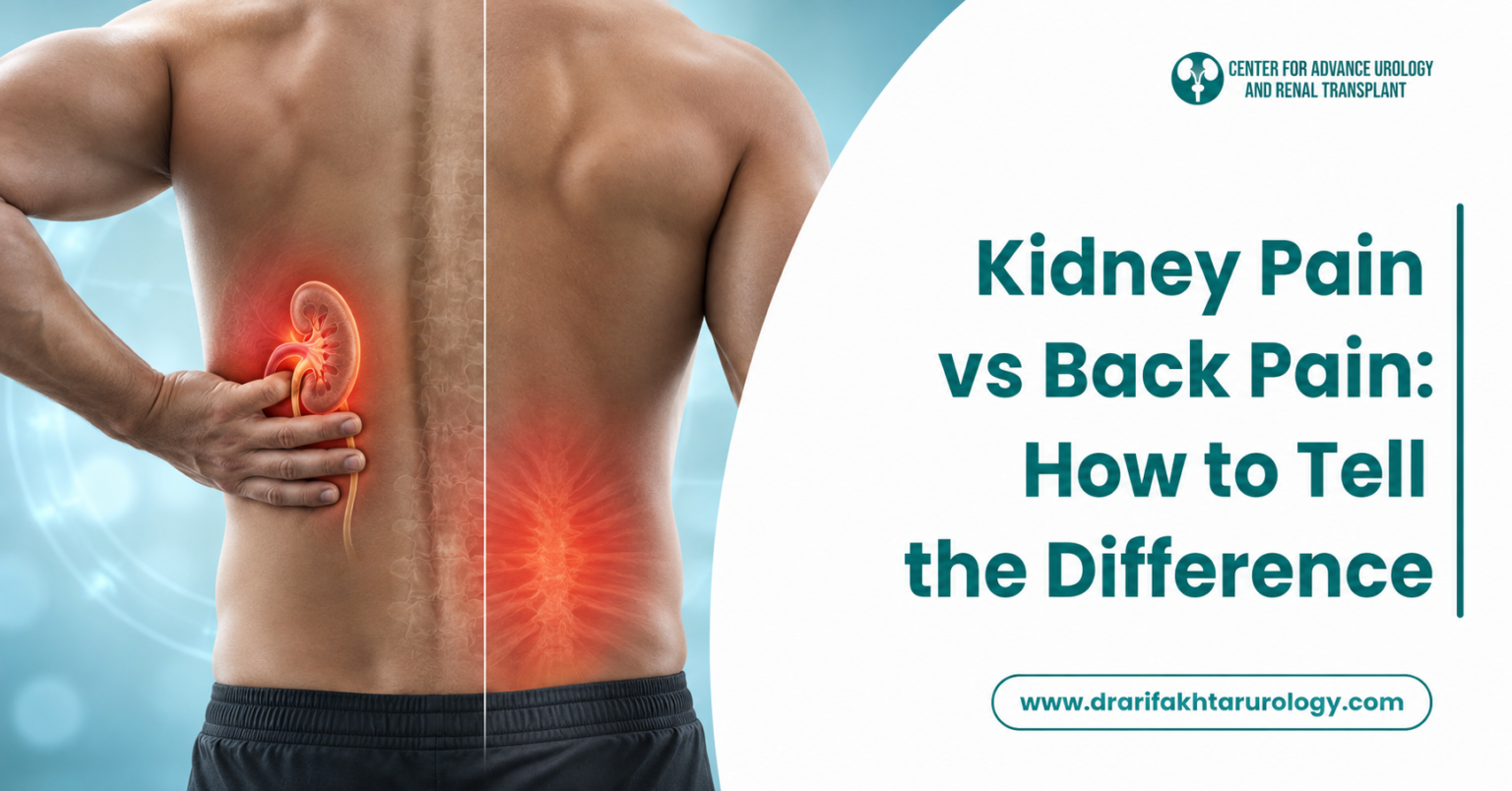
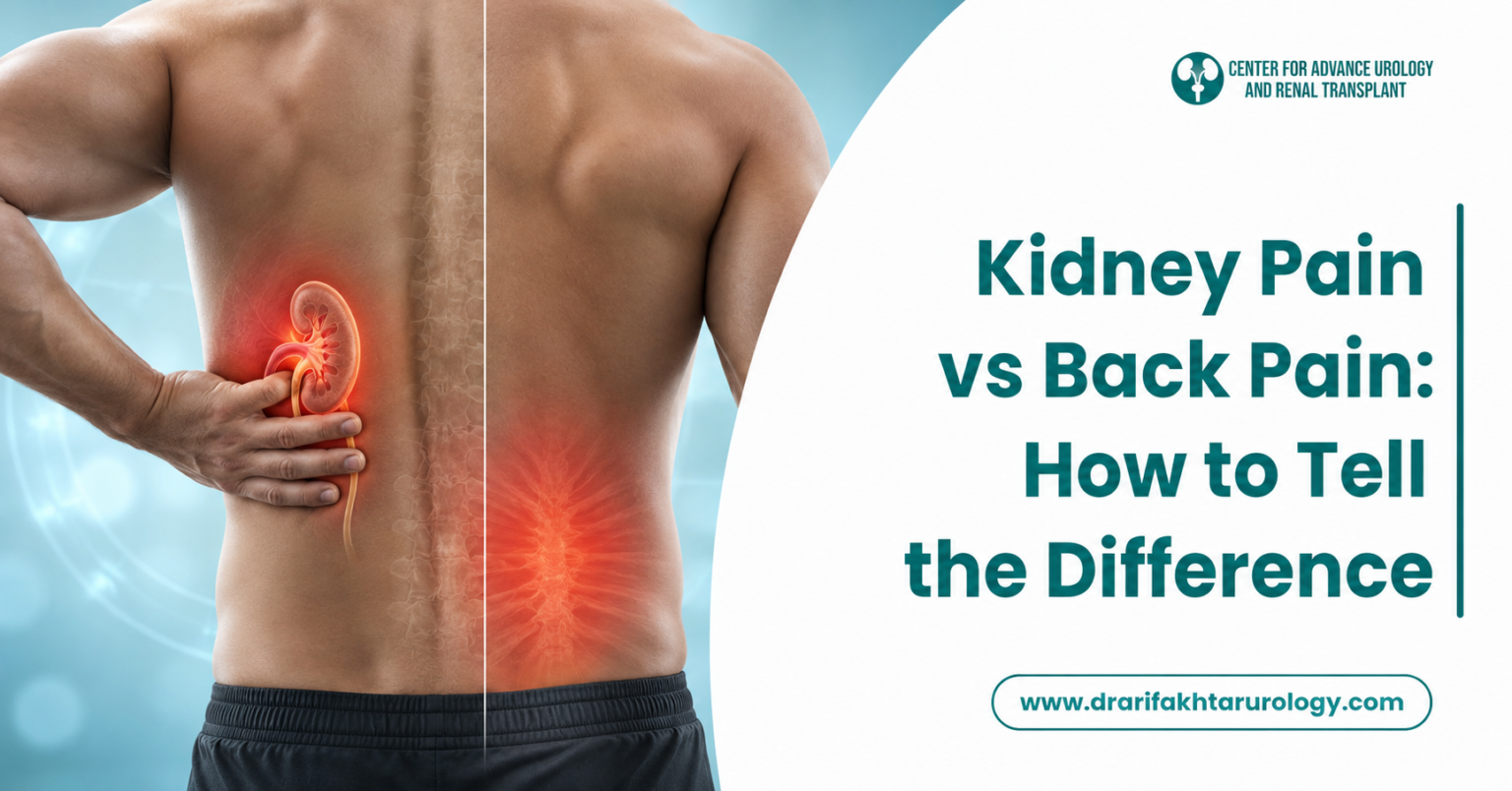
Kidney pain is typically felt in the flank, the area on either side of the body between the bottom of the ribs and the top of the hip, rather than in the center of the lower back where most muscular pain occurs. Because the kidneys sit higher and further to the side than most people assume, kidney-related pain often surprises people by appearing closer to the ribs than the beltline. It’s also usually one-sided, corresponding to whichever kidney is affected, though it can occasionally be felt on both sides.
What Does Kidney Pain Feel Like?
Kidney pain, especially from a kidney stone, tends to be a deep, constant ache that can suddenly intensify into sharp, wave-like pain as the stone moves. This wave pattern, known as renal colic, is a fairly distinctive feature: the pain builds to an intense peak, eases somewhat, then builds again, often radiating from the flank down toward the lower abdomen or groin. Unlike a muscle strain, this type of pain generally doesn’t ease no matter how you’re sitting or lying, and people experiencing it often can’t get comfortable in any position.
What Does Muscular Back Pain Feel Like?
Muscular lower back pain typically feels like a dull, aching stiffness or a sharper localized pain that’s clearly tied to movement, specific postures, or recent physical activity. It commonly worsens with bending, twisting, or prolonged sitting or standing, and it often improves, at least temporarily, with rest, stretching, or over-the-counter pain relief. Unlike kidney pain, it usually stays in one general area without radiating toward the abdomen or groin.
What Symptoms Point to a Kidney Problem Rather Than a Muscle Issue?
Certain accompanying symptoms are far more associated with a kidney issue than with musculoskeletal pain, and their presence is often more useful than the pain itself in telling the two apart.
Does Kidney Pain Get Worse With Movement or Posture?
Generally, no, and this is one of the more reliable distinguishing features. Muscular back pain typically has a clear relationship with movement and posture: certain positions make it worse, others provide relief. Kidney pain, on the other hand, tends to persist regardless of how you move or sit, since the source of pain isn’t musculoskeletal. If shifting position, stretching, or lying down in a particular way doesn’t meaningfully change your pain, that’s a signal worth paying attention to.
When Should You See a Doctor Instead of Waiting It Out?
You should seek medical evaluation if pain is severe, one-sided, doesn’t improve with rest or position changes, or comes with any of the red-flag symptoms mentioned above, particularly fever, blood in the urine, or persistent nausea. General clinical guidance around flank pain consistently emphasizes that fever combined with flank pain warrants prompt evaluation, since it can indicate a kidney infection that needs timely treatment rather than a “wait and see” approach. Ordinary muscular back pain that’s mild, tied clearly to recent activity, and improving over a few days is reasonable to monitor at home, but pain that’s worsening, unusual, or accompanied by any urinary or systemic symptoms deserves a proper look.
Frequently Asked Questions
Can kidney pain be on the left side only?
Yes. Kidney pain is typically one-sided, corresponding to whichever kidney is affected, so left-sided-only pain is common and doesn’t necessarily indicate a bigger problem than right-sided pain would.
Does kidney pain go away if you change position?
Generally, no. Unlike muscular back pain, kidney pain usually doesn’t ease significantly with position changes, which is one of the more useful clues in telling the two apart.
Can a kidney problem cause pain without any urinary symptoms?
Yes, especially in earlier stages. Not every kidney issue causes noticeable urinary changes right away, which is why pain pattern and location still matter even without other symptoms present.
Is it normal for kidney stone pain to come and go?
Yes. Kidney stone pain classically comes in waves, known as renal colic, as the stone moves through the urinary tract, rather than staying at a constant, unchanging intensity like most muscular pain.
Should I try to diagnose this myself before seeing a doctor?
It’s fine to observe your symptoms and note their pattern, but self-diagnosis isn’t a substitute for a medical evaluation, since imaging and urine testing are the only reliable ways to confirm what’s actually causing the pain.
Conclusion
Kidney pain and back pain can genuinely look similar on the surface, but their location, pattern, and accompanying symptoms usually tell a different story once you know what to look for. Persistent, one-sided pain that doesn’t respond to rest or position changes, especially alongside fever, urinary changes, or nausea, is worth having evaluated rather than managed on assumption.
For accurate diagnosis and treatment, consult Dr. Arif Akhtar, experienced kidney stone doctor in Gurgaon, at the Centre for Advance Urology and Renal Transplant.