Foods that cause kidney stones include high-oxalate foods like spinach and beetroot, high-sodium foods like pickles and processed snacks, red meat, excessive sugar, alcohol, and mega-dose vitamin C supplements. Dehydration worsens the risk of all stone types. Limiting these foods and drinking 2.5 to 3 litres of water daily is the most effective kidney stone prevention diet.
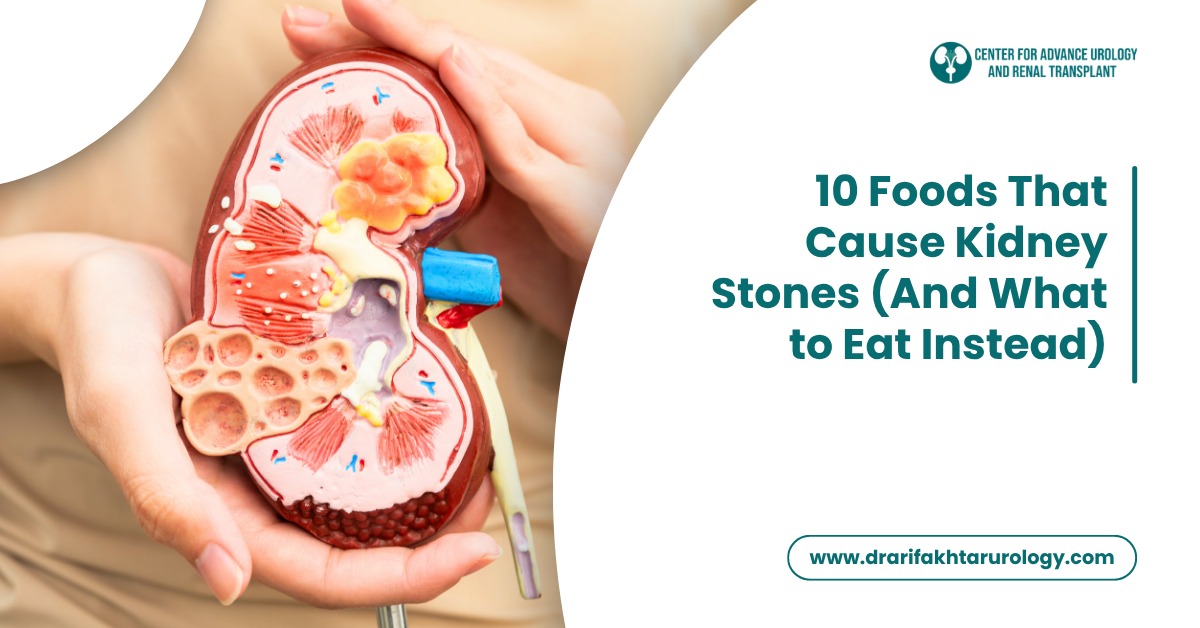
All this while, these 10 foods were making that stone in your kidney, and you were oblivious. What you eat every day has a direct impact on whether kidney stones form in your body. Certain foods raise the concentration of stone-forming minerals in your urine, and over time, these minerals crystallise into stones. The good news is that the right kidney stone diet plan can dramatically reduce your risk.
This guide by Dr. Arif Akhtar, a specialist urologist in Gurgaon, identifies the 10 most common dietary triggers for kidney stones, explains exactly why each one causes harm, and gives you a practical alternative for each. Whether you want to prevent your first stone or avoid a recurrence, this is the dietary reference you need.
How Does Food Actually Cause Kidney Stones?
Every time you eat, the nutrients in your food are absorbed into your blood and eventually filtered by your kidneys into urine. When your diet is high in certain minerals, salts, or compounds, these pass into the urine in higher concentrations than the liquid can dissolve. They then begin to crystallise, forming the deposits we call kidney stones.
The three main triggers are: oxalate (found in many vegetables and nuts), uric acid (produced when protein breaks down), and sodium (which raises calcium levels in urine). Different foods trigger different stone types.
To understand the full formation process, read: How Do Kidney Stones Form?
10 Foods That Cause Kidney Stones
Below are the ten most significant dietary contributors to kidney stone formation. Each entry includes the stone type it triggers, the mechanism, the specific threshold to be aware of, and a healthier substitute.
1. Spinach and Other High-Oxalate Greens
Stone type: Calcium oxalate stones (most common type) Spinach is one of the richest dietary sources of oxalate, a naturally occurring compound that binds with calcium in the urine to form calcium oxalate crystals. A single 100g serving of cooked spinach contains approximately 750 mg of oxalate, far above the recommended daily limit of 40 to 50 mg for stone-prone individuals. Beetroot, amaranth (chaulai), and sweet potato leaves carry similar oxalate loads.
Data: Spinach: approx. 750 mg oxalate per 100g cooked. Daily safe threshold for stone-prone patients: 40 to 50 mg total oxalate.
Eat instead: Kale, cabbage, bok choy, and cauliflower are low-oxalate greens you can eat freely. If you do eat spinach, pair it with a calcium-rich food like paneer or dahi, as calcium binds oxalate in the gut before it reaches the kidneys.
2. Table Salt and High-Sodium Foods
Stone type: Calcium oxalate and calcium phosphate stones
Excess sodium in the diet increases the amount of calcium excreted in urine. High urinary calcium then combines with oxalate or phosphate to form stones. Most Indians consume 8 to 11g of sodium per day, well above the WHO recommended limit of 5g. The hidden sodium in pickles, papads, namkeens, and packaged foods is the biggest contributor, not just the salt added during cooking.
Data: WHO recommended daily sodium limit: 5g (approx. 2,000 mg sodium). Every 2g of extra sodium above this threshold increases urinary calcium by approximately 40 mg.
Eat instead: Season food with lime juice, fresh coriander, cumin, or ajwain instead of salt. Use rock salt (sendha namak) in smaller quantities if needed. Avoid adding salt at the table.
3. Red Meat and Organ Meats
Stone type: Uric acid stones
When animal protein is metabolised, it produces uric acid as a byproduct. High uric acid in the urine leads directly to uric acid stone formation and also increases urinary calcium and oxalate, making it a triple risk factor. Organ meats such as liver, kidney, and brain have the highest purine content. Mutton, goat meat, and beef are also high-risk. Consuming more than 80g of animal protein per day significantly elevates stone risk.
Data: Safe animal protein limit: approximately 80g per day (about the size of a deck of cards). Organ meats contain 150 to 400 mg purines per 100g, compared to 50 to 150 mg in lean chicken.
Eat instead: Replace red meat meals with dal, rajma, chana, or tofu. If you eat meat regularly, shift to skinless chicken breast or fish, which have lower purine content than red and organ meats.
4. Sugary Drinks and Colas
Stone type: Calcium oxalate and uric acid stones
Colas and sweetened beverages contain high-fructose corn syrup, which raises uric acid levels in the blood and urine. Fructose also increases oxalate and calcium excretion. Studies have shown that people who drink one or more colas per day have a 23% higher risk of developing kidney stones. Packaged fruit juices and energy drinks carry the same risk. Even fresh fruit juice consumed in large quantities raises fructose load.
Data: Risk increase with 1+ colas per day: approximately 23% higher kidney stone risk. Each 355 ml can of cola contains approximately 40g of sugar (mostly fructose).
Eat instead: Plain water is the single most protective drink against kidney stones. Nimbu pani (lemon water without sugar), coconut water, and barley water are excellent alternatives that actively help prevent stone formation.
5. Vitamin C Supplements in High Doses
Stone type: Calcium oxalate stones This one surprises many patients. While vitamin C from natural food sources is perfectly safe, high-dose vitamin C supplements (above 1,000 mg per day) are metabolised into oxalate in the body, directly raising urinary oxalate levels. Multiple studies have linked supplemental vitamin C in doses above 1g per day with a significantly increased risk of calcium oxalate stones, particularly in men.
Data: Safe upper limit: 500 mg supplemental vitamin C per day. Doses above 1,000 mg per day can double urinary oxalate excretion in stone-prone individuals.
Eat instead: Get vitamin C through natural food sources instead: amla (gooseberry) is one of the richest natural sources. Guava, lemon, orange, and capsicum provide ample vitamin C at safe, food-appropriate concentrations.
6. Alcohol (Especially Beer)
Stone type: Uric acid stones and calcium oxalate stones
Alcohol is dehydrating, which concentrates all stone-forming minerals in the urine simultaneously. Beer is particularly problematic because it is high in purines, directly raising uric acid production. Spirits and wine raise uric acid through dehydration. Regular alcohol consumption also reduces kidney function over time, reducing the kidneys’ ability to clear stone-forming substances efficiently.
Data: Beer contains approximately 60 to 100 mg purines per 330 ml serving. Even moderate alcohol consumption (2 or more drinks per day) is associated with a 20 to 40% increase in uric acid stone risk.
Eat instead: Replace evening alcohol with barley water (jau ka pani), nimbu pani, or fresh chaas (buttermilk). Barley water in particular has a mild diuretic effect that actively helps flush the kidneys.
7. Processed and Packaged Snacks
Stone type: Calcium oxalate and calcium phosphate stones
Namkeens, biscuits, instant noodles, chips, and packaged snack foods are extremely high in sodium, artificial additives, and phosphates. Phosphate additives in particular directly raise urinary phosphate, increasing calcium phosphate stone risk. Most Indians snack on these foods daily without realising the cumulative sodium and phosphate load they carry. A single 100g packet of namkeen can contain up to 1,200 mg of sodium, nearly a quarter of the daily safe limit in one sitting.
Data: A 100g serving of typical namkeen: approximately 1,000 to 1,200 mg sodium. Ideal daily sodium target for stone-prone patients: under 2,000 mg.
Eat instead: Snack on roasted makhana (fox nuts, which are low in oxalate and sodium), fresh fruit, plain dahi, or cucumber with a pinch of cumin. These satisfy hunger without raising stone risk.
8. Excessive Tea and Coffee
Stone type: Calcium oxalate stones
Regular chai, especially strong black tea, is high in oxalate. A single cup of black tea contains approximately 50 to 100 mg of oxalate. For patients who drink 4 to 6 cups per day, tea alone can push them well above the safe daily oxalate threshold. Coffee is lower in oxalate but acts as a mild diuretic, which increases urine concentration if fluid intake is not compensated. The combination of high tea intake and low water intake is one of the most common kidney stone triggers seen in Indian patients.
Data: One cup of black tea: approx. 50 to 100 mg oxalate. 4 cups per day: 200 to 400 mg oxalate from tea alone, versus a safe daily limit of 40 to 50 mg for stone-prone patients.
Eat instead: Limit chai to 1 to 2 cups per day. Switch remaining cups to herbal teas (tulsi, ginger, or fennel), which are low in oxalate. Ensure you drink an extra glass of water for every cup of coffee.
9. Dark Chocolate and Cocoa Products
Stone type: Calcium oxalate stones Dark chocolate is widely promoted as a health food, but it is exceptionally high in oxalate. A 30g serving of dark chocolate (70% cocoa or above) contains approximately 100 to 150 mg of oxalate, which can account for two to three times the safe daily oxalate intake for a stone-prone patient in a single small portion. Cocoa powder used in milk drinks or desserts carries the same risk.
Data: 30g dark chocolate (1 small bar): approx. 100 to 150 mg oxalate. Cocoa powder (2 tbsp): approx. 150 mg oxalate.
Eat instead: Satisfy sweet cravings with white chocolate (very low oxalate), fresh seasonal fruits, or a small portion of jaggery-based Indian sweets. Carob powder is a cocoa alternative with near-zero oxalate content.
10. Excessive Calcium Supplements (Not Dietary Calcium)
Stone type: Calcium oxalate and calcium phosphate stones
This is one of the most misunderstood risk factors. Dietary calcium from food, such as dahi, milk, and paneer, actually protects against kidney stones by binding oxalate in the gut. However, calcium supplements taken in excess of 1,200 mg per day significantly increase urinary calcium and stone risk. Many patients take calcium tablets without medical supervision, not realising the dose is above their actual need.
Data: Safe supplemental calcium dose: up to 1,000 to 1,200 mg per day as part of overall intake. Excess supplemental calcium (above 1,200 mg) increases urinary calcium by 30 to 50 mg per extra 500 mg supplement.
Eat instead: Get calcium from food sources: one cup of dahi provides approximately 250 to 300 mg calcium, milk provides 300 mg per cup, and paneer provides 200 mg per 100g. These are absorbed more slowly and do not spike urinary calcium the way supplements do.
Special Note: Common Indian Foods and Kidney Stones
One question Dr. Arif Akhtar hears frequently at his Gurgaon clinic is: “Doctor, can I still eat my regular Indian food?” The answer is yes, in most cases, with some awareness. Here is a practical breakdown of the most commonly consumed Indian foods and their kidney stone risk level.
Palak (Spinach) and Palak Paneer
Palak is extremely high in oxalate and is one of the most common dietary triggers for calcium oxalate stones in Indian patients. However, the paneer in palak paneer helps bind oxalate in the gut. Limit palak to once or twice a week. Avoid palak soup, palak juice, or raw palak salad entirely.
Dal (Lentils)
Dal is a double-edged food for kidney stone patients. It is a healthy, plant-based protein alternative to meat, and therefore helps reduce uric acid stone risk. However, certain dals, particularly urad dal and masoor dal, have moderate purine content. For calcium oxalate stone patients, dal is generally safe. For uric acid stone patients, moderation is advised. Most patients can eat dal once a day without concern.
Chai (Tea)
As explained in Food 8 above, strong black tea is high in oxalate and is one of the most overlooked kidney stone triggers in India. Limiting chai to 1 to 2 cups per day and replacing the rest with water or herbal tea is one of the simplest and most impactful dietary changes a kidney stone patient can make.
Pickles, Papad, and Achar
These are among the highest-sodium foods in the Indian diet. A single papad contains approximately 400 to 500 mg of sodium. A tablespoon of mango pickle can contain 600 to 800 mg. Patients who eat these with every meal are consistently exceeding safe sodium thresholds. Limit to one papad per day maximum, and use achar sparingly, treating it as an occasional condiment rather than a daily staple.
Rajma and Chole
Rajma (kidney beans) and chole (chickpeas) are moderate-oxalate legumes and are generally well-tolerated by most kidney stone patients when eaten in normal portions. They are preferable to meat as a protein source. Patients with uric acid stones can eat these freely as plant protein does not raise uric acid the way animal protein does.
Foods to Eat Instead: Quick Reference
Use this as a ready reference when planning your kidney stone prevention diet. Your specific restrictions depend on which type of stone you have, so always confirm your personal dietary plan with a kidney stone specialist in Gurgaon or your treating urologist.
| Category | Limit or Avoid | Eat Instead |
| High-oxalate foods | Spinach, beetroot, nuts, dark chocolate | Kale, cabbage, cauliflower, white rice |
| High-sodium foods | Table salt, pickles, papad, processed snacks | Rock salt (in moderation), fresh herbs |
| Animal protein | Red meat, organ meats, mutton, shellfish | Lentils (dal in moderation), tofu, chicken breast |
| High-sugar drinks | Cola, fruit juices, energy drinks | Plain water, nimbu pani (no sugar), coconut water |
| High-fructose foods | Sweets, packaged fruit juice, sodas | Fresh seasonal fruit in moderate portions |
| Alcohol | Beer, spirits, wine | Water, herbal teas, barley water |
| Vitamin C supplements | Mega-dose vitamin C tablets (1000 mg+) | Food-based vitamin C: amla, guava, lemon |
What Should You Drink to Prevent Kidney Stones?
Hydration is the single most important factor in kidney stone prevention. No dietary change is as powerful as simply drinking enough water. Here is what to drink and what to avoid:
Best drinks for kidney stone prevention
- Plain water: minimum 2.5 to 3 litres per day. Your urine should be pale yellow or clear.
- Lemon water (nimbu pani, no sugar): citrate in lemon juice directly inhibits stone formation by preventing crystals from binding together.
- Coconut water: natural electrolytes and high potassium help prevent stone formation.
Barley water (jau ka pani): mild diuretic, flushes kidneys, very low oxalate. - Chaas (buttermilk, low-fat): provides calcium from a food source, which protects against oxalate absorption.
Drinks to limit or avoid
- Colas and sodas: high fructose, raises uric acid and oxalate.
- Packaged fruit juices: high sugar and fructose load.
- Strong black tea: high oxalate, limit to 1 to 2 cups per day.
- Alcohol, especially beer: dehydrating and purine-rich.
- Energy drinks: high sodium, sugar, and additives.
Important: Dietary changes are a powerful preventive tool but are not a substitute for medical treatment. If you have already been diagnosed with kidney stones, or if you experience kidney pain, blood in urine, or recurrent UTIs, please consult a specialist urologist for a full evaluation. A kidney stone diet plan should ideally be personalised based on which type of stone you have, determined through a stone composition analysis.
Need a Personalised Kidney Stone Diet Plan in Gurgaon?
Not sure which foods to avoid for your specific stone type? A single urology consultation with Dr. Arif Akhtar can give you a diet plan tailored to your stone composition, your daily routine, and your regular Indian diet, so you know exactly what to eat and what to limit.
Medical Disclaimer: This article is for general informational purposes only and does not constitute personalised medical advice. Dietary recommendations for kidney stones depend on the type of stone and individual health factors. Please consult Dr. Arif Akhtar or a qualified urologist for a personalised dietary and treatment plan.
Frequently Asked Questions
Q: Does spinach cause kidney stones?
Yes, spinach is one of the highest-oxalate foods and is a significant contributor to calcium oxalate stones, the most common type. Patients who are prone to kidney stones should limit spinach to once or twice a week, and always eat it with a calcium-rich food like paneer or dahi to bind the oxalate in the gut before it reaches the kidneys.
Q: Is milk bad for kidney stones?
No. Milk, dahi, and paneer are actually protective against kidney stones. Dietary calcium binds oxalate in the gut before it enters the bloodstream and urine. The mistake many patients make is taking excess calcium supplements, which does raise stone risk. Get calcium from food sources rather than tablets whenever possible.
Q: What is the best diet to prevent kidney stones?
The most effective kidney stone prevention diet includes drinking 2.5 to 3 litres of water daily, limiting sodium to under 2,000 mg per day, moderating high-oxalate foods like spinach and tea, reducing animal protein especially red meat and organ meats, and avoiding sugary drinks entirely. Lemon water daily provides citrate, a natural stone inhibitor.
Q: Can I eat rice if I have kidney stones?
Yes. White rice is low in oxalate and is generally well-tolerated by all types of kidney stone patients. Brown rice has slightly more oxalate but is still considered low-risk when eaten in normal portions. Rice is a safe staple for most kidney stone patients. The concern lies more with what is eaten alongside the rice, such as high-oxalate sabzis or high-sodium pickles.
Q: What should I drink to prevent kidney stones?
The most important drink is plain water, at least 2.5 to 3 litres daily. Adding fresh lemon juice (without sugar) provides citrate, which actively inhibits stone crystal formation. Coconut water, barley water, and chaas are also beneficial. Avoid colas, packaged juices, alcohol, and energy drinks entirely if you are stone-prone.
Q: Are Indian spices bad for kidney stones?
Most common Indian spices, including haldi (turmeric), jeera, dhaniya, and hing, are fine in cooking quantities. However, turmeric in very high supplemental doses has moderate oxalate and should not be taken as a mega-supplement by stone-prone patients. Spices used for cooking in normal amounts do not significantly raise kidney stone risk.
Q: Can I eat dal if I have kidney stones?
Yes, for most patients dal is a healthy and safer protein choice than red meat. For calcium oxalate stone patients, dal is generally safe in normal portions. For uric acid stone patients, dal is preferred over meat as plant-based protein raises uric acid far less than animal protein. Urad dal has slightly higher purines, so patients with uric acid stones should moderate it.