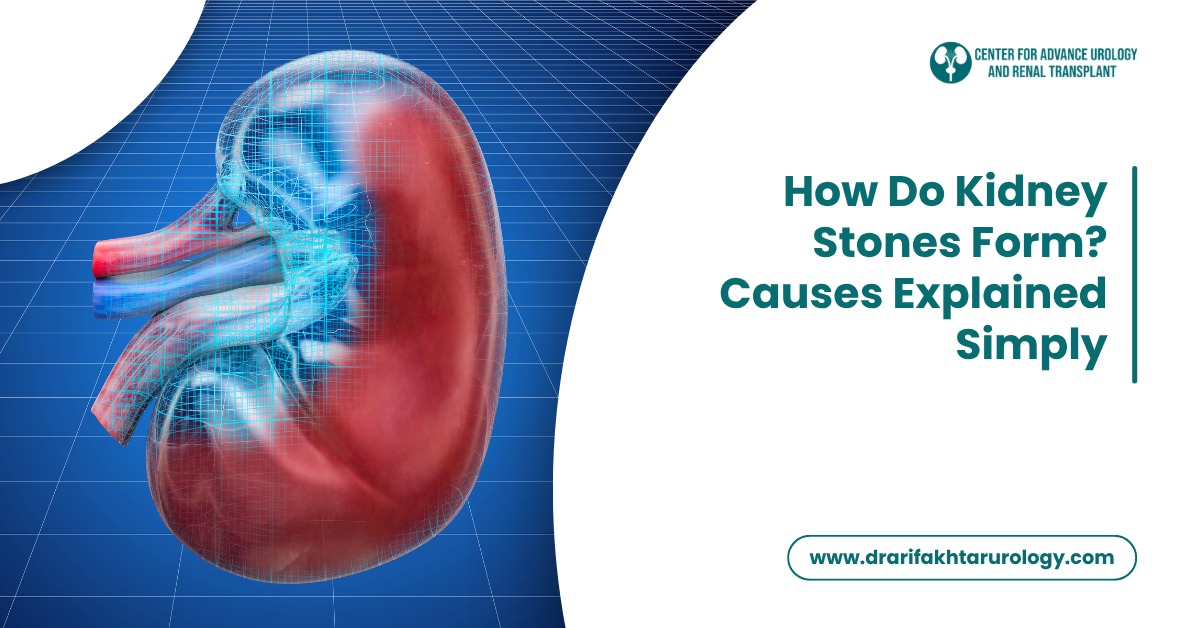
Kidney stones form when minerals and salts — mainly calcium, oxalate, and uric acid — become too concentrated in urine and crystallize. They grow over time into hard deposits inside the kidneys. Dehydration, diet, genetics, and certain medical conditions are the most common triggers. Most kidney stones are preventable with the right lifestyle changes and expert medical guidance.
Kidney stones are one of the most painful medical conditions a person can experience — often compared to the intensity of childbirth. Yet, millions of people develop them every year without fully understanding how or why. The good news? When you understand what causes kidney stones, you are already halfway to preventing them.
In this blog, we break down in plain, simple language exactly how kidney stones form, what causes them, who is at risk, and what you can do to protect your kidneys.
What Is a Kidney Stone?
A kidney stone medically known as a renal calculus — is a hard, solid piece of material that forms inside the kidney. It develops when certain minerals and salts present in urine become overly concentrated and begin to crystallize, much like how sugar crystals form at the bottom of a glass of sweet tea.
These crystals can grow from the size of a grain of sand to as large as a golf ball. Small stones often pass on their own. Larger ones can block the urinary tract, causing excruciating pain and requiring medical or surgical treatment.
How Do Kidney Stones Form? The Step-by-Step Process
Understanding kidney stone formation is simpler than it sounds. Here is what happens inside your kidneys:
Step 1 — Urine Becomes Concentrated
Your kidneys filter your blood and produce urine. When you do not drink enough water, your urine becomes highly concentrated — meaning there is more waste and fewer fluids to dilute it.
Step 2 — Minerals Start to Crystallize
When the concentration of minerals like calcium, oxalate, uric acid, or phosphate exceeds what the urine can dissolve, they begin to stick together and form tiny crystals.
Step 3 — Crystals Grow Into Stones
Over days, weeks, or months, these crystals continue to accumulate and grow larger — forming a kidney stone.
Step 4 — The Stone Moves (and That’s When It Hurts)
When a kidney stone travels from the kidney into the ureter (the narrow tube leading to the bladder), it causes intense, cramping pain — often called renal colic. This pain can radiate from the back to the lower abdomen and groin.
4 Main Types of Kidney Stones
Not all kidney stones are the same. Knowing the type helps doctors determine the right treatment and prevention strategy.
1. Calcium Oxalate Stones (Most Common — ~80%)
These form when calcium combines with oxalate — a substance found in many foods like spinach, nuts, and chocolate. Dehydration and a high-oxalate diet are the biggest risk factors.
2. Uric Acid Stones
These develop when urine is too acidic. Common in people who eat a high-protein diet (especially red meat), those with gout, or people who are overweight. These are more common in men than women.
3. Struvite Stones
These stones form as a result of certain urinary tract infections (UTIs). They can grow quite quickly and become large. More common in women who experience recurrent UTIs.
4. Cystine Stones
A rare type caused by a genetic disorder called cystinuria, where the kidneys excrete too much of an amino acid called cystine. These tend to recur throughout a person’s lifetime.
Top Causes of Kidney Stones — Explained Simply
1. Not Drinking Enough Water
This is the single most common cause. When you are dehydrated, your urine becomes dark and concentrated — the perfect environment for minerals to crystallize and form stones. Most kidney stone patients are chronically under-hydrated. Aim for at least 2.5 to 3 litres of water daily, especially in a hot climate like Gurgaon’s.
2. Unhealthy Diet
A diet high in salt, animal protein (red meat, poultry), and oxalate-rich foods significantly increases your kidney stone risk. Excessive salt raises calcium levels in urine. Too much protein raises uric acid levels. Highly processed and junk food also contributes.
3. Obesity and Being Overweight
Obesity alters urine chemistry and increases the risk of both calcium oxalate and uric acid stones. Insulin resistance — common in obese individuals — leads to more acidic urine, which promotes uric acid stone formation.
4. Family History and Genetics
If your parents or siblings have had kidney stones, your risk is significantly higher. Genetics can influence how your kidneys process calcium, oxalate, and other minerals. Cystine stones are almost entirely genetic.
5. Certain Medical Conditions
Several health conditions increase kidney stone risk, including hyperparathyroidism (overactive parathyroid gland raises blood calcium), gout (raises uric acid), renal tubular acidosis, inflammatory bowel disease, recurrent urinary tract infections, and type 2 diabetes.
6. Medications
Some medications can trigger kidney stones, including diuretics (water pills), calcium-based antacids, certain antibiotics, and topiramate (used for migraines and epilepsy). Always inform your urologist about any medications you take regularly.
7. Sedentary Lifestyle
A lack of physical activity leads to bone calcium being released into the bloodstream. This excess calcium eventually ends up in the urine, raising the risk of calcium-based stones. Even moderate daily exercise — like a 30-minute walk — can lower this risk.
Common Symptoms of Kidney Stones
Many small kidney stones cause no symptoms and pass without notice. Larger stones, however, can cause:
- Severe, sharp pain in the back, side, or lower abdomen (renal colic)
- Pain that comes in waves and fluctuates in intensity
- Burning sensation or pain while urinating
- Pink, red, or brown blood in urine (haematuria)
- Cloudy or foul-smelling urine
- Nausea and vomiting
- Frequent urge to urinate
- Fever and chills (if an infection is also present)
Important: If you experience sudden, severe flank pain or blood in your urine, consult a urologist immediately. Do not ignore these signs.
How to Prevent Kidney Stones — Practical Tips
- Drink more water: Target at least 2.5–3 litres per day. Your urine should be light yellow or clear.
- Reduce salt intake: Limit sodium to less than 2,300 mg per day. Avoid processed and packaged foods.
- Eat less animal protein: Reduce red meat, organ meats, and shellfish — especially if you have a history of uric acid stones.
- Limit oxalate-rich foods: Moderate your intake of spinach, beets, nuts, and chocolate if you are prone to calcium oxalate stones.
- Maintain a healthy weight: Losing even 5–10% of excess body weight can significantly reduce kidney stone risk.
- Stay active: At least 30 minutes of moderate exercise five days a week helps regulate calcium metabolism.
- Get regular kidney check-ups: Especially if you have a family history or have had a stone before — early detection saves you from future pain.
Conclusion
Kidney stones are painful but they are largely preventable. The most important steps you can take are staying well hydrated, eating a balanced diet, maintaining a healthy weight, and getting regular check-ups if you have a family history or have had stones before.
If you are already experiencing symptoms or have been diagnosed with kidney stones, do not wait for the pain to get worse. Seeking timely kidney stone treatment from an experienced urologist can prevent complications, reduce recovery time, and significantly lower your chances of recurrence. The earlier you act, the better your outcome.
Frequently Asked Questions (FAQs)
Q: Can kidney stones go away on their own?
Yes. Small kidney stones (less than 5mm) often pass through urine on their own within a few weeks, especially with increased fluid intake. However, larger stones or stones causing infections need medical treatment.
Q: What is the fastest way to dissolve a kidney stone?
There is no proven method to dissolve most kidney stones quickly at home. Uric acid stones can sometimes be dissolved with medication. For others, treatment options include ESWL (shock wave therapy), ureteroscopy, or PCNL (surgery) — depending on the Kidney stone’s size and location.
Q: Is kidney stone pain the worst pain a person can feel?
Kidney stone pain (renal colic) is frequently described as one of the most severe pains humans experience, often compared to childbirth. It is caused by the stone pressing against or moving through the narrow ureter.
Q: Can a kidney stone come back?
Yes. People who have had one kidney stone have a 50% chance of developing another within 10 years without preventive measures. That is why follow-up care and lifestyle changes after treatment are critical.
Q: What foods should I avoid if I have kidney stones?
Avoid or limit: excess salt, red meat and organ meats, spinach, beets, nuts, chocolate (if calcium oxalate stones), sugary drinks, and alcohol. Your specific dietary restrictions should be guided by the type of stone you have — always consult a kidney stone specialist.
Q: When should I see a doctor for kidney stone symptoms?
See a urologist immediately if you experience severe back or abdominal pain, blood in urine, fever with pain, inability to urinate, or persistent nausea with pain. These could indicate a stone requiring urgent treatment.
Medical Disclaimer: This article is intended for general informational purposes only and does not constitute medical advice. Please consult Dr. Arif Akhtar or a qualified healthcare professional for personalised diagnosis and treatment recommendations.