Introduction
Kidney stones are a common urological problem and can cause severe pain, urinary blockage, and infection if not treated properly. The treatment depends on the size, location, and type of stone, as well as the patient’s overall health. Today, several advanced and minimally invasive procedures are available for safe and effective removal of stones.
In this blog, we will discuss the different kidney stone treatment options available at Dr. Arif Akhtar’s clinic and how the right treatment is chosen for each patient.
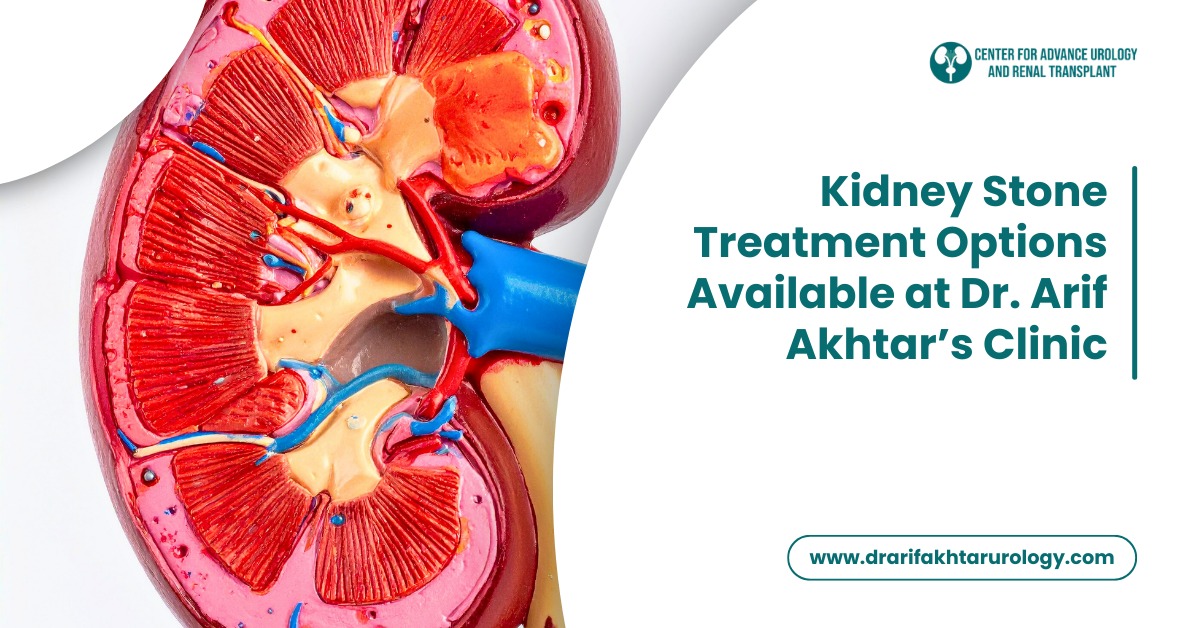
Kidney Stone Treatment Options Available at Dr. Arif Akhtar’s Clinic
Kidney stones form when minerals and salts accumulate inside the kidneys and become hard deposits. Some stones pass naturally, while others require medical or surgical treatment. Proper evaluation is important before deciding the best treatment method.
1. Medical Treatment for Small Kidney Stones
Small stones often pass through urine without surgery. In such cases, treatment focuses on reducing pain and helping the stone pass safely.
Treatment may include:
- Pain relief medication
- Medicines to relax the ureter
- Increased fluid intake
- Diet modification
Regular follow-up is necessary to make sure the stone passes completely.
2. ESWL – Shock Wave Therapy
Extracorporeal Shock Wave Lithotripsy (ESWL) is a non-surgical treatment used for certain kidney stones.
In this procedure:
- Shock waves are used to break the stone into small pieces
- The fragments pass through urine naturally
- No incision is required
This method is suitable for small to medium-sized stones.
3. URS – Ureteroscopy and Laser Stone Removal
Ureteroscopy is commonly used for stones in the ureter or kidney.
Procedure involves:
- A thin scope inserted through the urinary passage
- Laser used to break the stone
- Stone fragments removed safely
This is a minimally invasive procedure with quick recovery.
4. PCNL – Surgery for Large Kidney Stones
For large or complex stones, PCNL (Percutaneous Nephrolithotomy) is often recommended.
In this procedure:
- A small incision is made in the back
- A special instrument is used to remove the stone
- Suitable for large or multiple stones
PCNL provides high success rates for difficult cases.
5. Treatment for Recurrent Kidney Stones
Some patients develop stones repeatedly. In such cases, treatment focuses on preventing future stones.
Evaluation may include:
- Blood tests
- Urine analysis
- Diet review
- Metabolic evaluation
Prevention advice may involve:
- Drinking more water
- Reducing salt intake
- Controlling calcium and oxalate in diet
- Treating underlying medical conditions
Preventive care reduces the risk of future stone formation.
6. Advanced Diagnostic Tests Before Treatment
Before selecting the treatment, proper imaging is required.
Tests may include:
- Ultrasound scan
- CT scan
- X-ray KUB
- Urine tests
- Kidney function tests
These help determine the size, number, and location of stones.
7. Personalised Treatment Approach
Every patient is different, and kidney stone treatment should be planned individually. Factors considered include:
- Stone size
- Stone location
- Patient age
- Kidney function
- Previous stone history
Choosing the right treatment reduces complications and ensures faster recovery.
Conclusion
Kidney stones can be painful, but with the right diagnosis and treatment, they can be managed safely and effectively. If you are looking for reliable kidney stone treatment options, Dr. Arif Akhtar’s clinic offers advanced procedures including medication, laser stone removal, PCNL, and preventive care. With extensive experience in kidney and urology care, Dr. Arif Akhtar provides personalised treatment plans to ensure the best possible outcome and long-term kidney health