
Kidney stone disease is one of the most common urological conditions in India, with a particularly high incidence across Delhi NCR, Gurgaon, Haryana, Punjab, and North India due to climate, lifestyle, and dietary factors. Studies suggest that nearly 12% of the Indian population develops kidney stones, and untreated stones can lead to infection, obstruction, or permanent kidney damage.
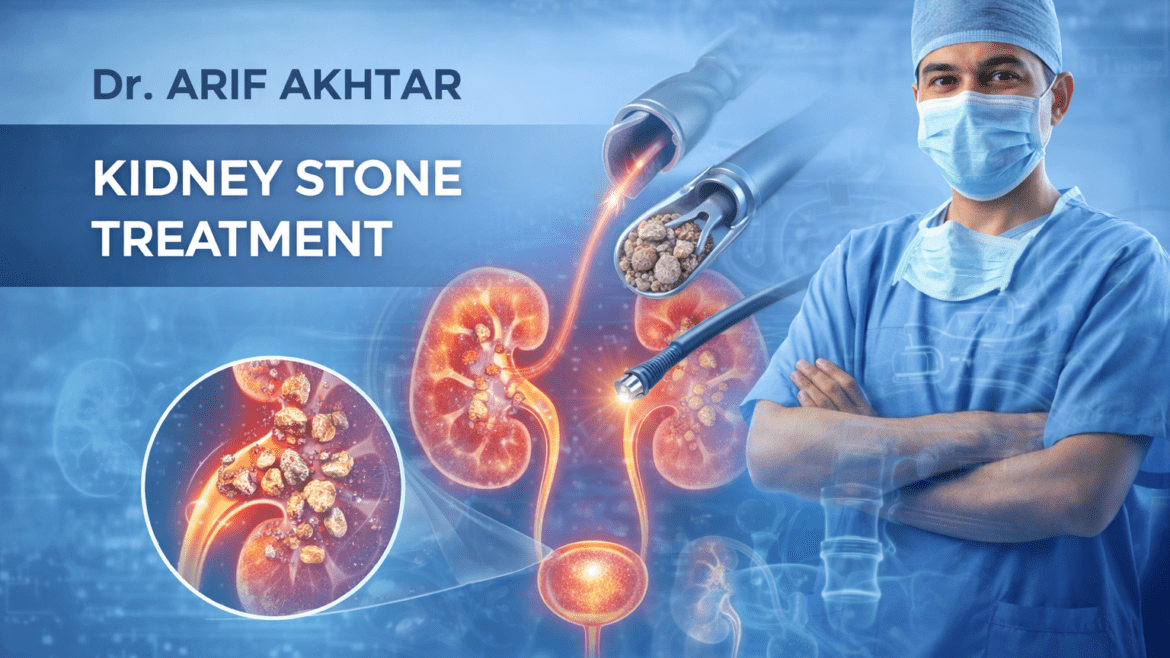
Patients seeking kidney stone treatment in Gurgaon can consult Dr. Arif Akhtar, Consultant Urologist, for accurate diagnosis and advanced, minimally invasive management. At his Sector 56, Gurgaon clinic, Dr. Akhtar provides comprehensive care ranging from medical management to laser and keyhole stone removal procedures.
What Are Kidney Stones?
Kidney stones are hard, crystal-like deposits that form inside the kidneys when minerals such as calcium, oxalate, uric acid, cystine, or phosphate accumulate and fail to dissolve in urine. These stones may remain in the kidney or move into the ureter, causing severe pain, urinary blockage, infection, or bleeding.
Is Kidney Stone Treatment Painful?
Kidney stone pain can be severe when a stone causes obstruction or moves through the urinary tract. However, modern treatments such as laser stone removal, ESWL, and minimally invasive surgery significantly reduce pain and allow faster recovery under safe anesthesia.
Causes of Kidney Stones
Kidney stones form when the balance of minerals and fluids in the urine is disrupted, allowing crystals to build up and form stones. Instead of a single cause, multiple lifestyle, medical, dietary, metabolic, and anatomical factors contribute to stone formation. Patients from Gurgaon and across Delhi NCR frequently require evaluation of underlying metabolic and lifestyle factors to prevent recurrent stones.
Kidney stones form when urine contains excessive minerals like calcium, oxalate, or uric acid and lacks enough fluids or natural inhibitors (e.g., citrate) to dissolve them, leading to crystal formation and stone development.
1. Low Fluid Intake / Dehydration
Inadequate hydration leads to concentrated urine, increasing the risk of crystal formation. Adults should aim for sufficient daily water intake to maintain clear or light-colored urine, especially in warmer climates like North India.
Low urine volume is one of the strongest risk factors for kidney stone formation due to increased mineral concentration.
2. Dietary Factors
Certain dietary habits influence stone risk:
- High salt (sodium) increases calcium leakage into urine
- High sugar and high animal protein raise stone-forming minerals and uric acid
- Excess oxalate-rich foods (spinach, beetroot, nuts, chocolate, tea, coffee, cola) can contribute to calcium-oxalate stones
- Low natural citrate intake (found in lemon/citrus) reduces stone prevention
Important: Restricting calcium entirely is not recommended unless medically advised, as balanced dietary calcium can reduce oxalate absorption.
3. Obesity & Lifestyle Disorders
Excess body weight, diabetes, insulin resistance, and sedentary lifestyle increase:
- Uric acid levels
- Urine acidity (low pH)
- Sodium excretion
These changes make stone formation more likely.
4. Metabolic and Genetic Conditions
Some people are predisposed due to metabolic or inherited disorders:
- Hyperparathyroidism
- Renal tubular acidosis
- Cystinuria
- Hyperoxaluria or Hyperuricosuria (high oxalate or uric acid in urine)
5. Digestive Disorders & Surgeries
Conditions that affect nutrient absorption can increase stone risk:
- Chronic diarrhea, Crohn’s disease, ulcerative colitis
- Bariatric/gastric bypass surgery
These conditions alter calcium–oxalate balance and increase dehydration risk.
6. Urinary Tract Infections (UTIs)
Recurrent or chronic infections can lead to struvite (infection-related) stones, which grow rapidly and may become large if untreated.
7. Anatomical or Structural Urinary Abnormalities
Certain conditions slow or obstruct urine flow, increasing stone risk:
- Ureteric obstruction or strictures
- Horseshoe kidney
- Vesicoureteral reflux
- Medullary sponge kidney
8. Medications & Supplements
Some commonly used drugs may increase stone risk, including:
- Excess Vitamin C or D supplements
- Calcium-based antacids
- Certain diuretics, laxatives, migraine or depression medications
Patients on long-term medication should discuss stone risk with their urologist.
Other Supporting Risk Factors
- Previous history of stones (high recurrence rate)
- Family history of stone disease
- Male gender (higher incidence)
- Hot climate leading to dehydration
- Low citrate levels in urine (natural stone inhibitor)
Summary
| Key Driver | Effect |
|---|---|
| Low water intake | Concentrated urine, crystal formation |
| High salt/sugar/protein | More calcium, uric acid, acidic urine |
| Obesity/diabetes | Uric acid stones, low urine pH |
| Metabolic disorders | High stone-forming minerals |
| UTIs | Infection stones (struvite) |
| Gut disorders/surgery | Oxalate imbalance, dehydration |
| Medications | Alter urine chemistry |
| Structural issues | Urine stasis, recurrent stones |
How Urine Chemistry Affects Stone Formation
- High calcium → Calcium stones (most common)
- High oxalate → Calcium oxalate stones
- High uric acid → Uric acid stones
- Infection-related bacteria → Struvite (infection stones)
- Genetic metabolic disorders → Cystine stones
Note: Many patients believe calcium in food causes stones. In reality, very low dietary calcium can actually increase stone formation because calcium binds oxalate in the gut and prevents it from entering the kidneys.
Signs & Symptoms – When to Suspect a Stone
Seek medical evaluation if you notice:
- Sudden severe pain in back, side, or lower abdomen
- Pain radiating to groin
- Burning or painful urination
- Blood in urine (red or brownish tinge)
- Frequent urge to urinate, passing small amounts
- Nausea, vomiting
- Fever with chills (possible infected stone — medical emergency)
Diagnosis by a Kidney Stone Specialist
For accurate detection and treatment planning, Dr. Arif Akhtar uses:
- Ultrasound KUB
- CT KUB (non-contrast) – Gold standard for diagnosis
- X-ray KUB
- Urine routine & culture
- Blood tests
- Metabolic stone evaluation (for recurrent stone formers)
When Is Surgery Required for Kidney Stones?
Surgery is recommended when stones:
- Are large or increasing in size
- Cause severe or persistent pain
- Lead to infection or obstruction
- Do not pass with medication
- Affect kidney function
The choice of procedure depends on stone size, location, symptoms, and kidney health.
Kidney stone treatment: A Comprehensive Approach
Kidney stone treatment involves the use of various methods to remove or break down stones, manage symptoms, and prevent recurrence. The right treatment plan is tailored to the individual, ensuring optimal outcomes based on specific needs.
At Dr. Arif Akhtar’s clinic in Sector 56, Gurgaon, patients receive advanced and customized care for kidney stones. Whether it’s complete stone removal, pain relief, or long-term prevention, Dr. Akhtar’s approach is designed to address every aspect of kidney stone management. From medical therapy for smaller stones to laser and keyhole procedures for larger or more complex stones, the treatment is evidence-based and ethically guided.
Treatment is not the same for all patients. It depends on:
🔹 Stone size
🔹 Stone location
🔹 Patient symptoms
🔹 Kidney function
🔹 Infection status
1. Conservative / Medical Management
Best for small stones (<5–6 mm)
- Pain control medications
- Alpha-blockers to help stone passage
- Medicines to dissolve uric acid stones
- Hydration and lifestyle correction
2. Non-Invasive Treatment
ESWL (Extracorporeal Shock Wave Lithotripsy)
- No incision
- Day-care procedure
- Shock waves break stones into passable fragments
3. Minimally Invasive Advanced Procedures
URS (Ureteroscopy + Laser Stone Removal)
- No external cut
- Laser breaks stone effectively
- Quick recovery, high success rate
PCNL / Mini PCNL (Keyhole Kidney Surgery)
- Best for large or complex stones
- Tiny incision in the back
- Highly effective for stones >15–20 mm
Why Patients Prefer Dr. Arif Akhtar for Kidney Stone Treatment
- Renowned Kidney Stone Surgeon in Delhi NCR
- Expertise in laser stone removal and complex stone cases
- Personalized and ethical treatment approach
- Focus on stone-free results + long-term recurrence prevention
- Uses latest minimally invasive technology
- High patient satisfaction and safety standards
Patients travel to consult Dr. Arif Akhtar in Gurgaon from across Delhi NCR for advanced kidney stone care.
Preventing Kidney Stones – Specialist Guidelines
Hydration Targets:
| Men | 3.5–4 L/day |
| Women | 2.5–3 L/day |
Dietary Advice:
- Reduce salt, processed food
- Moderate animal protein
- Maintain calcium intake through natural foods (not supplements)
- Limit oxalate if prone to oxalate stones
- Avoid excessive vitamin C, calcium pills unless prescribed
- Do not delay treatment for urine infection
Book a Consultation
If you are experiencing symptoms of kidney stones or need expert guidance, consult Dr. Arif Akhtar at his Sector 56, Gurgaon clinic for accurate diagnosis and advanced treatment options.
FAQ
What are kidney stones?
Kidney stones are hard mineral deposits that form in the kidneys and may cause pain when they move or block urine flow. They can vary in size and type, including calcium, uric acid, infection-related, or cystine stones.
Do all kidney stones require surgery?
No. Many small stones pass with medication and hydration. Surgery is needed only in selected cases. The decision depends on stone size, location, symptoms, infection, and kidney function.
Which treatment is best for kidney stones?
Treatment depends on stone size, location, symptoms, and kidney function. Options may range from medical management to ESWL, laser ureteroscopy, or keyhole surgery.
Can kidney stones come back?
Yes. Without prevention and metabolic evaluation, recurrence is common. Long-term prevention focuses on hydration, diet changes, and treating underlying risk factors.
Is kidney stone treatment painful?
Kidney stone pain can be severe when a stone causes blockage. However, modern treatments such as laser stone removal, ESWL, and minimally invasive surgery significantly reduce pain and allow treatment under safe anesthesia with faster recovery.
When should I see a urologist for kidney stones?
You should consult a urologist if you experience severe pain, blood in urine, fever, repeated stone episodes, or if imaging confirms a stone. Early evaluation helps prevent complications such as infection or kidney damage.
Is laser kidney stone treatment safe?
Yes. Laser kidney stone treatment is widely used and considered safe. It allows precise fragmentation of stones with minimal injury to surrounding tissue and low complication rates when performed by an experienced urologist.
How long does it take to recover after kidney stone treatment?
Recovery depends on the procedure. Most patients return to normal activities within 2–7 days after ESWL or ureteroscopy. PCNL may require 1–2 weeks for complete recovery.